
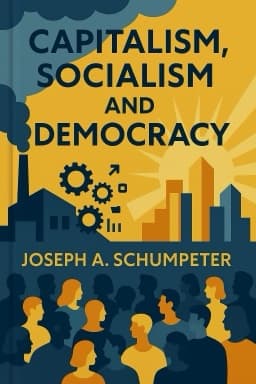
Democracy, Discontent, and the Role of Intellectuals: Schumpeter’s Political Warnings
How Public Mood and Criticism Can Make or Break Economic Systems

Schumpeter’s vision of democracy was refreshingly realistic. Rather than idealize the wisdom of the masses, he saw democracy as a practical mechanism for choosing leaders. Elections are contests, not coronations. The people judge, but rarely rule directly.
But Schumpeter also warned that democracy is fragile. When public mood turns sour, when trust in institutions erodes, even the strongest systems can falter. Intellectuals—writers, artists, academics—play a double-edged role. Their criticism can spark needed reforms, but it can also fuel cynicism and division. In today’s world, social media amplifies every voice, making it easier to spread both truth and misinformation.
Leaders, too, face new challenges. The competition for votes can become a contest of personalities rather than ideas. Short-term promises may win elections, but they rarely solve deep-seated problems.
What is the solution? Schumpeter believed that democracy requires more than elections. It needs a healthy public sphere, robust debate, and above all, trust. Societies must learn to balance criticism with constructive engagement, to listen as well as to speak. Only then can democracy fulfill its promise—and avoid the pitfalls of discontent and division.
Want to explore more insights from this book?
Read the full book summary