
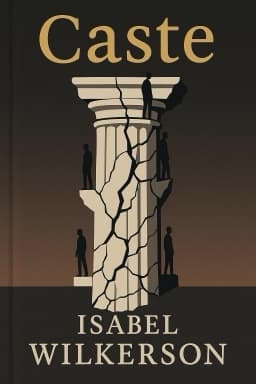
The Eight Pillars Holding Us Back: Why Change Is So Hard—and What We Can Do About It
Discover the Ancient Rules Still Shaping Our Lives—and How to Break Free

Discover the Ancient Rules Still Shaping Our Lives—and How to Break Free
Why do societies cling to hierarchy, even when it causes so much pain? Isabel Wilkerson’s answer is both simple and profound: because of the eight pillars of caste. These foundational rules—divine will, heritability, endogamy, purity versus pollution, occupational hierarchy, dehumanization, terror as enforcement, and inherent superiority—are the invisible architecture of social division. They are passed down not just through laws, but through stories, rituals, and daily habits, making them deeply resistant to change.
Wilkerson traces these pillars across continents and centuries, showing how they appear in different forms but serve the same function: to keep people in their place and justify inequality. For example, the belief in divine will makes the hierarchy seem sacred and unchangeable, while terror as enforcement ensures compliance through fear. These pillars are so deeply embedded that most people follow them unconsciously, accepting the status quo as natural.
But Wilkerson also offers a roadmap for change. By naming and understanding the pillars, individuals and communities can begin to challenge them. This might mean questioning inherited beliefs, forging new rituals of inclusion, or standing up to everyday acts of exclusion. The process is slow and often met with resistance, but history shows that even the strongest pillars can be worn down by the steady force of empathy, courage, and collective action.
1
2
Want to explore more insights from this book?
Read the full book summary