
You Won’t Believe How Deep the Roots Go: The Hidden Architecture of Caste in America
Unveiling the Skeleton Beneath Our Society—And Why It Matters More Than Ever

Unveiling the Skeleton Beneath Our Society—And Why It Matters More Than Ever
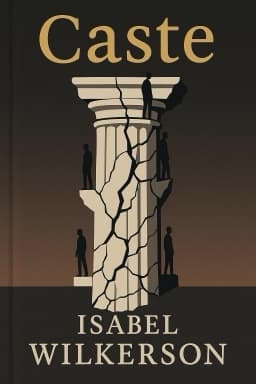
Imagine living in a house where, no matter how much you clean or decorate, mysterious cracks keep appearing in the walls. This is the metaphor Isabel Wilkerson uses to describe America’s social structure—a house built on foundations that its current occupants did not lay, but must maintain or repair. In her groundbreaking book, 'Caste: The Origins of Our Discontents,' Wilkerson reveals that the true force shaping American life is not just race, but an invisible caste system that ranks people from birth, dictating their opportunities, relationships, and even self-worth. She argues that caste is the skeleton beneath the skin of race, the silent code that organizes society into a fixed hierarchy.
Drawing on examples from America, India, and Nazi Germany, Wilkerson traces the eight pillars that uphold caste systems everywhere: divine will, heritability, endogamy, purity versus pollution, occupational hierarchy, dehumanization, terror as enforcement, and inherent superiority. These pillars are not just abstract ideas—they are lived realities, shaping who gets to lead, who must serve, and who is allowed to dream. For instance, Wilkerson describes how American segregation laws were so detailed and severe that Nazi Germany used them as a blueprint for their own racial codes. This chilling connection underscores how caste, more than race or nationality, is a global method of social control.
1
2
But Wilkerson’s book is not just a catalogue of pain. Through vivid storytelling, she brings to life the daily indignities and quiet acts of courage that define life under caste. Microaggressions—like being mistaken for staff or ignored in meetings—accumulate into generational trauma, affecting everything from health to ambition. Yet, she also celebrates the resilience of those who resist: the parents who choose empowering names for their children, the communities that rewrite rituals to include everyone, and the individuals who insist on being seen.
Wilkerson’s central insight is that healing requires more than laws—it demands empathy, honesty, and collective action. She shows that every period of progress is met with backlash, as those invested in the old order fight to restore their place. Yet, moments of awakening—when one person stands up or a community refuses to comply—can ripple outward, inspiring real change. The book ends with a vision of a world beyond caste, where shared rituals, inclusive leadership, and radical empathy can set everyone free.
For anyone seeking to understand the roots of inequality and the path to healing, 'Caste' is an essential, transformative read. It challenges us to see the cracks in our own house, to acknowledge the pain of the past, and to imagine a future where every person is valued equally.
3
4
Want to explore more insights from this book?
Read the full book summary