
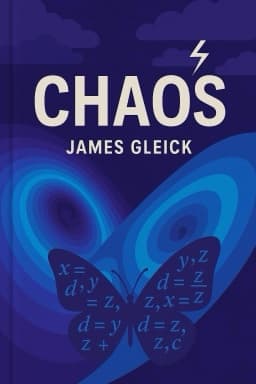
Embracing Uncertainty: How Chaos Theory Is Shaping the Future of Science, Art, and Technology
See why chaos theory is more relevant than ever—and how it inspires creativity and innovation.

Chaos theory isn’t just a relic of 20th-century science—it’s a living, breathing field that continues to shape our world in surprising ways. As we face the challenges of the future, from climate change to artificial intelligence, the lessons of chaos are more relevant than ever.
In art and design, fractals have inspired everything from digital landscapes to architectural marvels. Computer graphics use chaos algorithms to create realistic clouds, mountains, and textures. Musicians compose pieces based on fractal patterns, while artists use strange attractors to craft mesmerizing visuals.
In technology, chaos theory helps engineers design resilient networks and manage the unpredictable flows of information and energy. In medicine, it offers new ways to analyze the rhythms of the heart and brain. In climate science, chaos models help us understand the limits of prediction and the need for flexible, adaptive responses.
Perhaps most exciting is the intersection of chaos theory and artificial intelligence. Researchers are using chaos-inspired algorithms to build smarter, more adaptable systems—ones that can learn, evolve, and respond to the unpredictable twists of the real world.
But beyond its practical applications, chaos theory offers a hopeful vision for the future. It teaches us to embrace uncertainty, to find beauty in complexity, and to see the world as a place of endless possibility. In a world that often feels chaotic, chaos theory reminds us that unpredictability is not the end of understanding, but the beginning of discovery.
As we move forward, the legacy of chaos will continue to inspire new generations of scientists, artists, and innovators—each finding new ways to turn disorder into creativity, and uncertainty into hope.
Want to explore more insights from this book?
Read the full book summary