
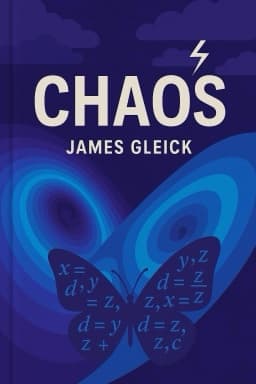
Fractals: Why Nature’s Roughness Is the Universe’s Secret Code
Explore the astonishing beauty and hidden order of fractals in our world.
Look closely at a coastline, a fern leaf, or a cloud, and you’ll see something extraordinary: the same patterns repeating, again and again, at every scale. This is the world of fractals, a hidden geometry that underlies much of nature’s complexity and beauty. Thanks to chaos theory and the visionary work of Benoit Mandelbrot, we now know that the messiness of the natural world is not random—it’s governed by simple rules that create infinite variety.
For centuries, mathematicians struggled to describe the irregular shapes of the real world. Classical geometry gave us circles, squares, and triangles, but these were too smooth, too simple. Nature, by contrast, is rough and wild. Mandelbrot’s insight was to embrace this roughness, showing that many natural forms are self-similar: zoom in on a small part, and it looks like the whole.
This self-similarity is the hallmark of fractals. The most famous is the Mandelbrot set, a shape generated by a simple equation that contains endless, intricate detail. Zoom in, and you see miniature copies of the whole, spiraling forever into the unknown. This isn’t just a mathematical curiosity—it’s a window into how the universe builds complexity from simplicity.
Fractals are everywhere. The branching of trees, the veins in leaves, the structure of lungs, the flow of rivers, the clustering of galaxies—all follow fractal patterns. Even the stock market, with its wild swings and sudden crashes, shows fractal behavior. Fractals are the secret code that nature uses to create order out of apparent chaos.
Today, fractals inspire not just scientists, but artists and engineers. Digital artists use fractal algorithms to create stunning landscapes and special effects. Architects design buildings that echo the branching patterns of trees. Medical researchers use fractal analysis to study the structure of the brain and the rhythms of the heart.
What makes fractals so captivating is their paradoxical nature: they are both simple and infinitely complex, ordered and chaotic. They remind us that beauty is everywhere, even in the rough edges of the world. Whether you’re looking at a mountain range or a snowflake, you’re seeing the universe’s secret code in action.
Fractals show us that the universe is not a smooth, predictable machine, but a tapestry woven from repeating patterns. And in that endless repetition, we find both mystery and meaning.
Want to explore more insights from this book?
Read the full book summary