
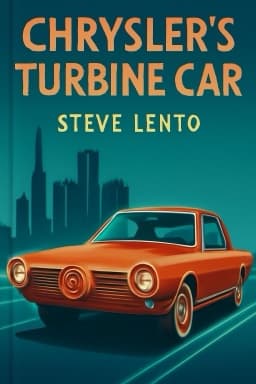
The Jet Age Dream That Almost Changed Cars Forever: Inside Chrysler’s Turbine Revolution
Discover how Chrysler dared to dream big with turbine-powered cars inspired by jet engines and why this bold vision still captivates today.

In the aftermath of World War II, the world was captivated by the promise of jet propulsion. The roar of jet engines symbolized speed, power, and a future unbound by the limitations of piston-driven machines. It was this excitement that inspired Chrysler to embark on a daring experiment: building cars powered by gas turbine engines, the very same technology that propelled aircraft through the skies. This was not a mere fantasy but a serious engineering endeavor that spanned decades and pushed the boundaries of automotive design.
The Chrysler turbine car was unlike anything else on the road. Its engine had fewer moving parts, ran smoother and quieter, and could operate on a remarkable variety of fuels — from gasoline to diesel, even unconventional liquids like tequila or perfume. This versatility hinted at a future less dependent on oil and more adaptable to changing energy landscapes.
Yet, the road to this innovation was fraught with challenges. Engineers had to develop new alloys capable of withstanding extreme temperatures, invent precise manufacturing processes such as investment casting, and design a car body that matched the futuristic engine inside. The Ghia Turbine Car, with its handcrafted aluminum body and copper-colored leather interior, became a rolling symbol of progress and craftsmanship.
Chrysler’s boldest move was its public user program, where over 200 turbine cars were loaned to everyday drivers across America. These drivers experienced the turbine’s smooth acceleration and instant heat but also faced quirks like slow throttle response and fuel economy issues. The program was a massive public relations success, drawing crowds and media attention, but it also revealed the practical limits of the technology.
Ultimately, regulatory hurdles, especially emissions standards targeting nitrogen oxides, combined with financial pressures as Chrysler’s market share declined, led to the program’s cancellation. Most turbine cars were destroyed to protect corporate secrets, leaving only a handful preserved in museums and private collections.
Despite this, the turbine car’s legacy endures. Its influence can be seen in modern hybrid and electric vehicle technologies, and it remains a cultural icon of the optimistic space age. Enthusiasts and collectors continue to restore and celebrate the surviving cars, keeping the spirit of innovation alive.
The Chrysler turbine car story is a powerful reminder that innovation requires courage, persistence, and sometimes sacrifice. It teaches us that even projects that don’t reach mass production can leave lasting marks on technology and culture. As we look to the future of automotive innovation, the turbine car remains a beacon of what imagination and engineering can achieve.
For more detailed accounts and technical insights, visit sources such as Hagerty’s in-depth history of Chrysler’s turbine program, SlashGear’s technical breakdown, and AutoNews’s coverage of Chrysler's century of innovation. 1 3 2
Want to explore more insights from this book?
Read the full book summary