
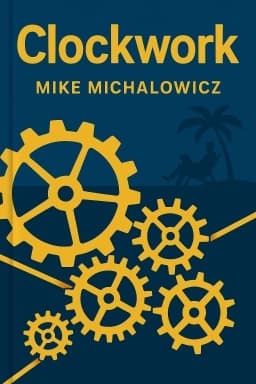
7 Surprising Lessons from Clockwork That Will Make Your Business Run Without You
Unlocking Business Freedom: How Clockwork’s Core Lessons Turn Chaos Into Consistency

Unlocking Business Freedom: How Clockwork’s Core Lessons Turn Chaos Into Consistency
Imagine a business that hums along smoothly while you take a month-long vacation—no panicked phone calls, no fires to put out, just a steady stream of satisfied customers and empowered employees. This isn’t a fantasy. It’s the promise at the heart of Mike Michalowicz’s Clockwork: Design Your Business to Run Itself, a book that’s become a cult favorite among entrepreneurs seeking not just success, but sanity. In this in-depth review, we’ll explore the seven most powerful—and sometimes counterintuitive—lessons from Clockwork that can transform your business from a chaotic time-sink into a self-sustaining machine.
1. The Productivity Trap: Why Working Harder Keeps You Stuck
Most entrepreneurs believe that if they just work harder, they’ll eventually break free. But as Michalowicz points out, the more productive you become, the more tasks you take on. This is the productivity paradox: increased efficiency leads to increased expectations and, ultimately, burnout. Parkinson’s Law—work expands to fill the time available—means that without boundaries, you’ll never find time for the visionary work that matters.
2. The Four Ds: The Secret Mix for Business Freedom
Clockwork introduces the Four Ds: Doing, Deciding, Delegating, and Designing. Most owners are stuck in Doing and Deciding, making every choice and solving every problem. The key is to shift towards Delegating (empowering others to own outcomes) and Designing (creating systems and strategy). The optimal mix? 80% Doing, 2% Deciding, 8% Delegating, and 10% Designing. Tracking your time—even for a week—can reveal where you’re stuck and where you need to shift focus.
3. The Queen Bee Role: Protecting Your Business’s Core Function
Every business has a Queen Bee Role (QBR)—the single most important function that must be protected at all costs. It’s not a person, but a process or role on which your company’s success hinges. Discovering your QBR (using the Sticky Note Method) allows you to align your team and resources around what truly matters, ensuring consistent quality and growth.
4. Systemization: Capturing and Optimizing Your Business DNA
You don’t need massive manuals—just simple, accessible documentation. Use video captures, checklists, or flowcharts to document how things get done. The Trash, Transfer, Trim framework helps refine these systems: eliminate waste, delegate what you can, and streamline what remains. Regular reviews and updates keep your systems relevant as your business evolves.
5. Delegation: From Task Assignment to Outcome Ownership
True delegation isn’t just about offloading tasks—it’s about transferring responsibility and trusting your team to make decisions. Aligning each person’s role with their strengths (their Zone of Genius) boosts productivity and morale. Feedback loops and a culture of accountability turn mistakes into learning opportunities, driving continuous improvement.
6. The Four-Week Vacation Challenge: Testing True Independence
The ultimate test of your business’s sustainability is whether it can run without you for four consecutive weeks. This challenge exposes system gaps and empowers your team to step up. Many owners find their businesses actually improve during their absence, as employees innovate and solve problems independently.
7. Freedom Is the Goal: Redefining Success as Owner Independence
Clockwork’s message is clear: success isn’t just about money or growth—it’s about freedom. By balancing your Four Ds, protecting your QBR, systemizing your processes, and building a strong team, you can reclaim your time and design a business that serves your life.
In summary, Clockwork is a masterclass in business design, blending practical systems with a healing, optimistic philosophy. It’s a must-read for any entrepreneur ready to escape the survival trap and build a business—and a life—of true freedom.
References:
1
,
2
,
3
,
4
Want to explore more insights from this book?
Read the full book summary