
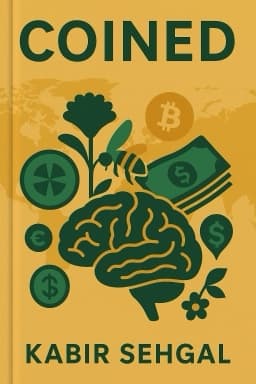
Unlocking the Secrets of Money: How Psychology, History, and Culture Shape Your Wallet
Dive deep into the fascinating world where human nature meets currency, revealing why money is more than just numbers.

Money is everywhere—yet it remains one of the most misunderstood forces shaping human behavior and society. Beyond the numbers on your bank statement lies a complex story that stretches back millions of years, rooted in biology and evolving through psychology, culture, and technology. This blog aims to unravel these secrets and provide you with a fresh perspective on what money truly means.
The Biological Origins of Exchange
Long before humans minted coins or printed banknotes, the natural world was already engaged in a grand economy of exchange. Consider the symbiotic relationships in ecosystems—tiny cleaner fish remove parasites from large sea turtles, benefiting both parties. Such cooperation is not accidental; it is an evolutionary strategy for survival. Energy flows like currency in nature, from plants to herbivores to carnivores, creating a vast interconnected web. Early humans crafted hand axes not only as tools but possibly as early symbols of value, hinting at the dawn of symbolic exchange.
The Mind’s Money: Psychology and Neuroscience
When you think of money, what emotions arise? Excitement? Anxiety? The brain’s reward center, the nucleus accumbens, lights up at the prospect of financial gain, similar to how it reacts to addictive substances. Yet, we are also wired to dread losses more than we enjoy gains, a bias known as loss aversion. These emotional undercurrents influence decisions ranging from investments to daily spending, often steering us away from pure rationality. Our subconscious mind, influenced by environmental cues like music or weather, nudges us in subtle ways. Understanding these forces can empower better financial choices.
Debt and Gift Economies: The Social Glue
Money does not exist in a vacuum; it is deeply social. Before coins, debt systems connected people through obligations and trust. In many cultures, gift economies create powerful social bonds where giving and receiving are ongoing, not transactional events. These systems maintain community cohesion and define social status. For example, the potlatch ceremonies of the Pacific Northwest tribes exemplify how generosity can be a form of power and respect. Modern crowdfunding echoes these ancient practices, blending social obligation with financial support.
Hard Money: Coins and Metals
The invention of coinage around 7th century BC Lydia marked a revolutionary step. Coins standardized value and facilitated trade across regions. But money’s physical form was also political—emperors stamped their faces on coins to assert authority. However, debasement of coins, like in ancient Rome, showed the fragility of trust in money’s material backing. Coins also carry rich cultural symbolism, serving as portable museums of history and identity.
Soft Money and the Digital Revolution
The transition from metal coins to paper money in 10th century China introduced a new paradigm: money as a promise backed by government authority rather than intrinsic value. The modern fiat currency system relies on trust in institutions. Now, digital payments and cryptocurrencies are reshaping economies, making transactions faster and more inclusive. In many emerging markets, mobile money has leapfrogged traditional banking, expanding financial access dramatically.
The Soul of Money: Values, Religion, and Art
Money also reflects our deepest values. Religious teachings across the world link wealth to morality and charity, cautioning against greed and promoting generosity. Currency art embodies national identity and cultural pride, from the eagle on the US dollar to spiritual motifs on ancient coins. These layers remind us that money is not just economic—it is a mirror of our collective soul.
Conclusion: Embracing Money’s Many Facets
From the biological impulses driving exchange to the spiritual teachings shaping ethics, money is a multifaceted phenomenon. Recognizing its complexity enriches our understanding and guides us toward wiser, more compassionate financial lives. Money is not merely a tool but a living symbol of human connection, aspiration, and culture.
Embrace this knowledge, and transform your relationship with money into one of awareness and empowerment.
Sources: Insights synthesized from evolutionary biology, behavioral economics, anthropology, history, and contemporary financial studies, including perspectives from Morgan Housel’s 'The Psychology of Money' and related scholarly works.
Want to explore more insights from this book?
Read the full book summary