
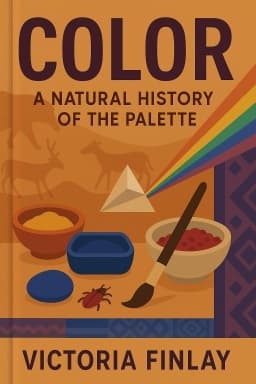
Unlocking the Secrets of Color: The Untold History Behind Every Hue
Dive deep into the fascinating journey of color from prehistoric caves to modern art and science.

Dive deep into the fascinating journey of color from prehistoric caves to modern art and science.
Imagine standing inside a dimly lit cave, ancient walls alive with the warm reds and yellows of ochre paintings created over 40,000 years ago. These early pigments mark the dawn of human creativity, revealing an innate desire to communicate and connect through color. Ochre, a natural iron oxide pigment, was the first paint used by humans, found across continents and cultures. Alongside charcoal, which was used to sketch outlines, these pigments laid the foundation for art and ritual.
But what exactly is color? At its core, color is the interaction of light and matter, a dance of electromagnetic waves and the way our eyes and brains interpret them. Our visible spectrum is only a tiny sliver of the light spectrum, yet it contains millions of hues. When light hits an object, some wavelengths are absorbed by electrons, which jump to higher energy levels, while others reflect back to us. The reflected light is what we perceive as color.
Cultures around the world have imbued colors with profound meanings. Aboriginal Australians consider ochre sacred, using it in initiation ceremonies to symbolize blood and ancestral connection. In ancient times, Tyrian purple was so rare and expensive that only emperors could wear it, its production requiring thousands of sea snails. Indigo dye, produced independently in Asia, Africa, and the Americas, became a symbol of spirituality and resistance. These colors were not mere decoration; they were social codes, spiritual tools, and economic treasures.
The evolution of pigments also tells a story of human innovation. From grinding minerals by hand to the invention of the paint tube in 1841, which enabled outdoor painting and modern art movements, color materials have shaped artistic expression. The rise of colormen—specialized pigment suppliers—marked a shift from craft to commerce, expanding access but changing artists’ relationship to their materials.
Red pigments like ochre, cochineal, and madder root carry deep symbolism tied to life, death, and fertility. Yellow and orange hues from saffron and orpiment tell stories of trade, sacred rituals, and even danger due to toxicity. Blue pigments, especially ultramarine from lapis lazuli, were treasured above gold, while purple’s mystique is rooted in labor-intensive shellfish dyes and royal mysticism.
In the end, color is a timeless language that connects us to our ancestors, our cultures, and the natural world. It is a dynamic force, constantly evolving through scientific discovery and artistic innovation. As you look around at the colors in your life, remember the deep history and meaning behind every hue, and let color inspire your own creativity and connection.
Unlock the secrets of color, and you unlock a story as old as humanity itself.
Want to explore more insights from this book?
Read the full book summary