
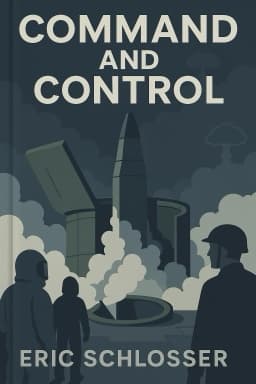
Command and Control: The Cold War’s Invisible Web of Nuclear Power
How complex networks and tense politics governed the deadliest weapons ever created.

Beyond the physical might of missiles like the Titan II lay an intricate and often fragile network of command and control systems. These were the veins and nerves of the Cold War nuclear arsenal, responsible for detecting threats, authenticating launch orders, and coordinating responses across vast distances and multiple military branches.
The United States developed systems such as the World Wide Military Command and Control System (WWMCCS) and the Semi-Automatic Ground Environment (SAGE) to integrate radar, communications, and computing power. These networks were designed to provide rapid, reliable decision-making capabilities essential for deterrence and response.
However, the management of nuclear weapons was marked by a persistent tension: civilian agencies like the Atomic Energy Commission insisted on democratic oversight, while the Strategic Air Command demanded operational control to ensure readiness. This tug-of-war influenced policies and the very architecture of command systems.
Strategic doctrines such as Mutually Assured Destruction (MAD) relied on these systems to function flawlessly, but technological glitches and human errors were constant threats. The balance between speed and safety was precarious, and the stakes—potential global annihilation—were unimaginably high.
Understanding this invisible web helps us appreciate the complexity and danger inherent in nuclear deterrence. For a detailed history, explore the American Experience documentary and archival resources. 1 4
Want to explore more insights from this book?
Read the full book summary