
Is Consciousness Just an Illusion? Unpacking Daniel Dennett’s Mind-Bending Theory
Explore the revolutionary idea that consciousness is not what it seems but a complex illusion crafted by the brain.

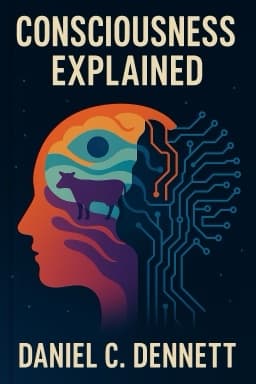
When we think about consciousness, we often imagine a single, unified self watching the world from a central theater inside our brain. Daniel Dennett’s 'Consciousness Explained' shatters this comforting image. Instead, he proposes that consciousness is an emergent illusion, a narrative stitched together from multiple parallel processes he calls 'multiple drafts.' There is no central observer or Cartesian Theater; rather, our mind is a dynamic newsroom where competing versions of reality are constantly being written and rewritten.
This insight comes from examining phenomena like hallucinations, which reveal the brain’s limitations in simulating reality. The brain cannot generate fully interactive, detailed sensory worlds internally because of a computational combinatorial explosion. Hallucinations occur when the brain’s curiosity or 'epistemic hunger' is partially satisfied by incomplete, passive sensory input, allowing illusions to persist without full sensory verification.
Dennett also tackles the mind-body problem head-on, debunking dualism — the idea that mind and body are separate substances. He explains that dualism fails because it cannot account for how a non-physical mind interacts with the physical brain without violating laws of energy conservation. Materialism, by contrast, views consciousness as arising from brain processes, providing a testable and coherent framework.
To scientifically study consciousness, Dennett introduces the method of heterophenomenology, where subjective reports are treated neutrally as data to be interpreted, bridging first-person experience and third-person science. This method respects the richness of subjective experience without assuming its literal truth.
Further, the book explores how consciousness evolved through the Baldwin Effect and cultural transmission of memes, showing that brain plasticity and social learning co-evolved to produce the complex minds humans possess today. Language plays a pivotal role, enabling us to build internal narratives and self-awareness, transforming the mind into a self-aware storyteller.
Finally, Dennett dissolves classic philosophical puzzles like qualia and the self, showing these arise from conceptual confusions and are best understood as brain-generated phenomena and narrative fictions.
Dennett’s work invites us to embrace consciousness as a natural, comprehensible phenomenon — a remarkable product of evolution, brain architecture, and culture — rather than a mystical enigma. This perspective not only advances science but offers a deeply optimistic view of ourselves and our place in the universe.
For more insights on consciousness and philosophy of mind, see detailed discussions at Want to explore more insights from this book?