
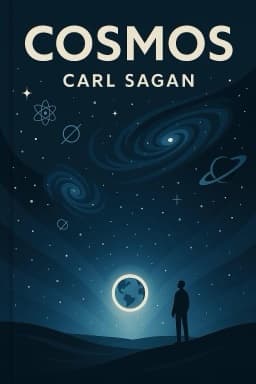
Our Cosmic Future: How Humanity Can Thrive Among the Stars Despite Existential Threats
Reflect on the challenges facing humanity and the hopeful path forward as we reach for the stars.

As we stand on the brink of a new era, humanity faces both unprecedented challenges and incredible opportunities. The same technological prowess that enables space exploration also brings risks such as nuclear war, which could inject soot into the atmosphere and trigger a devastating nuclear winter. Such a catastrophe would imperil all life on Earth, underscoring our shared vulnerability and the urgent need for global cooperation.
Despite these threats, humanity has shown remarkable capacity for collaboration. International scientific endeavors like the International Space Station demonstrate our ability to unite across borders in pursuit of knowledge and peaceful exploration. These efforts inspire hope that we can overcome divisions and work together to safeguard our planet and expand our presence into the cosmos.
The search for extraterrestrial life continues to captivate scientists and the public alike. With billions of potentially habitable planets in our galaxy, the discovery of life beyond Earth would profoundly impact our understanding of biology, evolution, and our place in the universe.
Embracing a cosmic perspective encourages us to see Earth as a fragile oasis in a vast, mysterious universe. It calls us to act as responsible stewards, nurturing our home and advancing scientific knowledge with humility and care. For small creatures such as we, the vastness is bearable only through love—love for our planet, for each other, and for the quest that drives us onward among the stars.
This hopeful vision challenges us to rise above fear and division, to invest in education, sustainability, and peaceful cooperation, and to dream boldly of a future where humanity thrives both on Earth and among the stars.
Sources: Shortform’s Best Cosmology Books (2025), The Greatest Books of All Time on Cosmology, Hemibooks’ Updated Guide to Essential Reading, BookAuthority’s Top Cosmology Picks [[0]](#__0) [[1]](#__1) [[2]](#__2) [[3]](#__3)
Want to explore more insights from this book?
Read the full book summary