
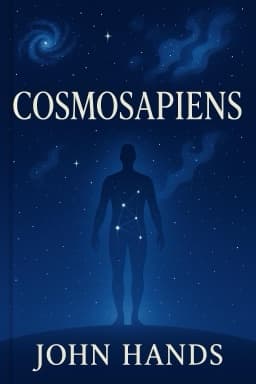
Unlocking the Secrets of Life’s Cosmic Origins: From Stardust to Consciousness
How the universe’s evolution paved the way for life and the emergence of human consciousness

Our story begins in the hearts of stars, where the elements that make up our bodies were forged through nuclear fusion and supernova explosions. Hydrogen and helium, born from the Big Bang, were just the starting points. Heavier elements like carbon, oxygen, and iron emerged in stellar furnaces, scattered across space to form planets and, eventually, life itself.
Carbon, in particular, is the backbone of life’s complex molecules, thanks to its unique ability to form four stable bonds. This versatility underlies the chemistry of proteins, DNA, and cellular structures. But how did these molecules assemble into living organisms? Scientific hypotheses such as the primordial soup and RNA world theories suggest pathways from simple organic molecules to self-replicating systems.
The earliest life forms were microscopic and extraordinarily complex despite their simplicity. Even single-celled organisms possess intricate molecular machines that challenge easy definitions of life. Over billions of years, evolution shaped life’s diversity, driven by natural selection and genetic variation.
Consciousness, the hallmark of human experience, evolved gradually along with nervous system complexity. From basic sensory responses in bacteria to the reflective awareness in humans, consciousness represents a continuum. This evolutionary perspective bridges biology and philosophy, raising questions about the nature of mind and self.
Understanding our cosmic origins enriches our appreciation of life and humanity’s place in the universe. We are, quite literally, made of stardust—products of cosmic evolution with the remarkable capacity to reflect on our own existence.
References:
- EarthSky: Intelligent life and human origins
1
- Philosophy Institute: Scientific theories of universe and life
4
Want to explore more insights from this book?
Read the full book summary