
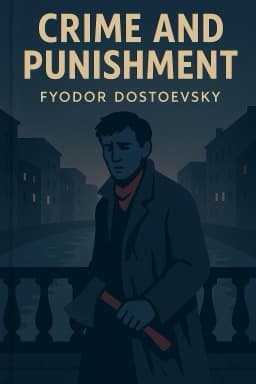
Saint Petersburg’s Dark Heart: How the City Shapes Crime and Punishment’s Moral Landscape
Explore how the sprawling, foggy streets of Saint Petersburg become a living, breathing character that reflects the novel’s deepest themes.

In Dostoevsky’s Crime and Punishment, Saint Petersburg is far more than a backdrop—it is a living, breathing entity that shapes and reflects the narrative’s moral and psychological drama. This sprawling city, with its foggy canals, crowded streets, and oppressive heat, mirrors the protagonist’s fractured mind and the social decay permeating the story.
The labyrinthine layout of the city—with its bridges and canals—symbolizes the complexity and confusion of Raskolnikov’s internal struggle. As he navigates the dark alleys and squalid taverns, the city’s physical environment becomes a metaphor for his moral ambiguity and alienation. The oppressive atmosphere, thick with smoke and despair, underscores the social inequalities and spiritual desolation faced by many characters.
Saint Petersburg’s urban decay is not merely aesthetic; it reflects a deeper societal malaise. The stark contrasts between wealthy and impoverished areas highlight the tensions that drive much of the novel’s conflict. The city’s relentless bustle and noise amplify the protagonist’s isolation, emphasizing how environment can intensify psychological distress.
Moreover, the city acts as a stage for chance encounters and symbolic events that propel the plot. Taverns filled with desperate souls, crowded streets teeming with life, and shadowy alleys where secrets unfold—all contribute to a rich tapestry that is both vivid and symbolic.
Dostoevsky’s portrayal of Saint Petersburg invites readers to consider how place influences identity and morality. The city’s presence is felt in every scene, shaping destinies and reflecting the novel’s themes of alienation, crime, and redemption.
Understanding Saint Petersburg’s role enriches our reading of the novel, revealing how environment and psyche interconnect in a profound literary dance. For further cultural and thematic insights, see discussions on SparkNotes and literary journals that explore the city’s symbolism in detail. 1 3
Want to explore more insights from this book?
Read the full book summary