
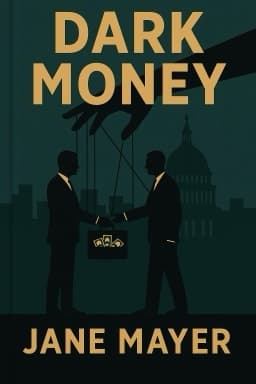
Dark Money and Democracy: The Billionaire Network’s Invisible Hand
How Legal Loopholes and Secret Donations Are Reshaping American Politics

The 2010 Supreme Court decision in Citizens United v. FEC marked a seismic shift in American campaign finance, equating political spending with free speech. This ruling opened the floodgates for corporations and nonprofit organizations to spend unlimited sums on elections without disclosing their donors, giving rise to the phenomenon known as 'dark money.'
Dark money flows primarily through 501(c)(4) social welfare organizations, which operate under tax codes that allow political activity without donor transparency. This legal loophole provides billionaires with a powerful tool to influence politics invisibly, shielding their identities and the magnitude of their contributions from public view.
The consequences are profound. Voters are often unaware of who funds the political messages they receive, undermining the principle of informed choice. Policy outcomes increasingly reflect the priorities of wealthy donors rather than the broader electorate, skewing governance in favor of concentrated interests.
Efforts to regulate dark money face formidable legal and political obstacles. The billionaire network employs skilled legal teams and strategic philanthropy to defend and expand these loopholes, ensuring their continued influence. Meanwhile, advocacy groups and reformers push for greater transparency and stricter disclosure requirements to restore accountability.
This blog draws on analyses from political scientists and legal scholars who highlight the complex interplay between court rulings, nonprofit structures, and political strategy. Understanding these dynamics is crucial for citizens and policymakers seeking to safeguard democratic integrity in the face of growing financial opacity.
As debates over campaign finance reform continue, the story of dark money serves as a stark reminder of the challenges posed by the intersection of wealth and political power.
1 , 3
Want to explore more insights from this book?
Read the full book summary