
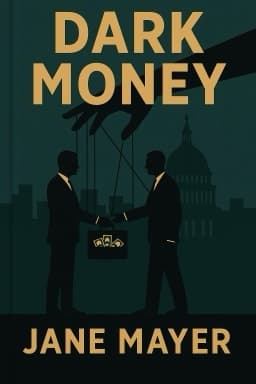
Inside the Billionaire’s Secret Playbook: How Wealth Quietly Rules Democracy
Unveiling the Hidden Networks Where Billionaires Control America’s Political Destiny

Imagine a world where the fate of a nation is shaped not in public debates or open elections, but behind closed doors in exclusive resorts and private summits. This is the realm of America’s billionaire political network—a hidden architecture of influence that quietly directs the course of democracy. At its heart are secretive donor summits where some of the richest individuals pool their vast fortunes to fund campaigns, shape legislation, and install sympathetic judges.
The story begins with families like the Koch brothers, whose fortune partly traces back to controversial engineering projects for regimes like Nazi Germany and Stalin’s Soviet Union. Raised in austere, ideologically charged environments, they developed a libertarian vision that rejects government intervention and champions free markets at all costs. Alongside them, the Mellon Scaife dynasty channeled old money into strategic philanthropy, funding think tanks and media outlets that wage an intellectual war against progressive ideas.
Philanthropy here is not mere charity; it is a tactical weapon. Foundations with ambiguous names fund academic programs, campus groups, and even educational video games, all designed to seed conservative ideology among young people. This ideological infrastructure feeds into a sophisticated political machine that combines grassroots activism with cutting-edge data analytics, enabling precise voter targeting and effective campaign mobilization.
Legal battles have further empowered this network. The landmark Citizens United Supreme Court decision equated money with speech, unleashing an unprecedented flood of dark money through nonprofit organizations that hide their donors. This secrecy undermines democratic transparency and accountability, raising critical questions about the health of American governance.
Moreover, the network aggressively opposes environmental and labor regulations to protect business interests, even when their companies face safety violations and public backlash. Their influence extends deeply into courts and legislatures, shaping rulings and laws that entrench their power for decades.
Yet, amidst these challenges, new movements advocating transparency, campaign finance reform, and economic justice offer hope for democratic renewal. Understanding the mechanisms of billionaire influence is essential to reclaiming power for the people and ensuring that democracy remains vibrant and fair.
This exploration draws on extensive research and analysis from multiple sources, including Brookings Institution’s insights on billionaire political clout, scholarly examinations of billionaire political behavior, and critical reviews of dark money’s impact on elections. The complex interplay of wealth, secrecy, ideology, and power revealed here is a call to awareness and action for all citizens concerned about the future of democracy.
1 , 3 , 4
Want to explore more insights from this book?
Read the full book summary