
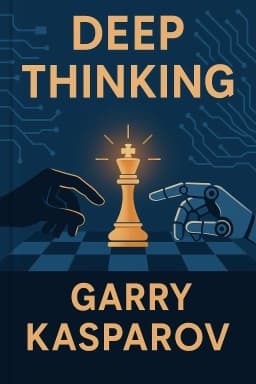
Deep Blue vs Kasparov: The Match That Changed Everything
Unpacking the legendary 1997 chess battle that reshaped our understanding of AI and human intellect

In May 1997, the chess world watched with bated breath as Garry Kasparov, the reigning world champion, faced off against IBM’s supercomputer Deep Blue. This match was more than a contest of moves; it was a symbolic confrontation between human intuition and machine calculation. The outcome—a stunning victory for Deep Blue—marked a historic milestone that reverberated far beyond the chess community.
Deep Blue was no ordinary machine. Utilizing custom-designed chess chips, it analyzed up to 200 million positions per second, far outpacing human calculation speed. Its software combined brute-force search with sophisticated evaluation functions, allowing it to navigate complex positions with remarkable precision.
Yet the match was not without drama. Kasparov encountered unexpected machine moves that defied conventional chess wisdom, unsettling his psychological equilibrium. Additionally, technical glitches and pauses during the games sparked debates about the match’s fairness and transparency. Some speculated about human intervention behind the scenes, while others marveled at the machine’s ingenuity.
Kasparov’s emotional journey was profound—ranging from disbelief and frustration to introspection and eventual acceptance. His loss challenged deeply held beliefs about human supremacy in intellectual domains and forced a reevaluation of AI’s role in society.
The match’s legacy extends beyond chess. It symbolizes a pivotal moment when artificial intelligence crossed a threshold, demonstrating capabilities that demand respect and caution. It also highlights the complexities of integrating AI into human contexts, where trust, ethics, and emotion intertwine.
For those interested in an in-depth recounting and analysis, Chess.com’s detailed coverage, Chessiverse’s historical retrospectives, and Kasparov’s own writings provide rich perspectives on this legendary encounter.
1 2 3
Want to explore more insights from this book?
Read the full book summary