
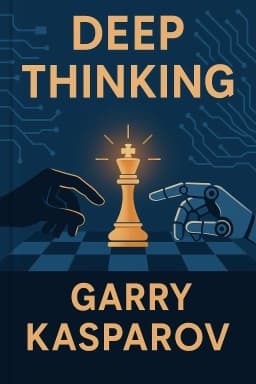
When Chess Machines Took Over: How Humans Lost and Learned from AI
A deep dive into the thrilling saga of humans battling chess machines and what it means for our future with AI

Chess has long been considered the ultimate test of human intellect—a game where strategy, intuition, and creativity converge. For centuries, it was a battlefield exclusively for human minds, until the dawn of computer chess machines changed everything. The journey from early experiments to the historic matches between Garry Kasparov and IBM’s Deep Blue is a thrilling saga, filled with tension, triumph, and transformation.
In the early days, chess machines were primitive, limited by slow hardware and basic algorithms. Yet, pioneers laid the foundation with concepts like the minimax algorithm and alpha-beta pruning, enabling machines to evaluate possible moves and counter-moves efficiently. These innovations allowed early machines to challenge human players in simplified forms, marking the beginning of a new era.
By the late 1980s, machines started winning against strong human players in tournament settings, signaling a shift. The 1988 victory of a chess machine over a grandmaster was a watershed moment, proving that machines could compete at the highest levels. But it was the 1997 match where Deep Blue defeated the reigning world champion that truly shocked the world. This event was more than a game lost; it was a symbolic milestone where artificial intelligence demonstrated undeniable superiority in a domain once thought uniquely human.
These encounters were not just about moves on a board but psychological battles. Humans faced unprecedented stress competing against tireless, calculating machines. The fear of obsolescence and the challenge of adapting to new technology echoed broader societal anxieties about automation and AI. Yet, history teaches us that resistance gives way to acceptance and collaboration.
Enter Advanced Chess—an innovative approach where human players use machines as partners rather than opponents. This hybrid model combines human creativity and intuition with machine precision and speed, resulting in gameplay stronger than either alone. The concept of 'centaur' chess teams exemplifies this synergy, offering a hopeful vision of human-machine collaboration.
Beyond chess, this story mirrors our evolving relationship with technology. We increasingly outsource memory and computation to digital devices, augmenting our cognition but also facing risks of over-reliance. Balancing technology use with active engagement is crucial for maintaining deep understanding and creativity.
Ultimately, the saga of human versus machine in chess is a metaphor for the future. It challenges us to embrace change, harness technology wisely, and recognize that human creativity remains irreplaceable. By working alongside machines, we can unlock new heights of achievement and innovation.
As we look forward, the lessons learned from chess offer guidance for navigating the complex interplay of human and artificial intelligence in all walks of life.
For more detailed accounts and analysis of these historic matches and concepts, see sources like Chess.com’s coverage of Kasparov’s legacy, Chessiverse’s chronicles of memorable matches, and Garry Kasparov’s own reflections on AI and human collaboration in the Harvard Business Review.
1 2 3
Want to explore more insights from this book?
Read the full book summary