
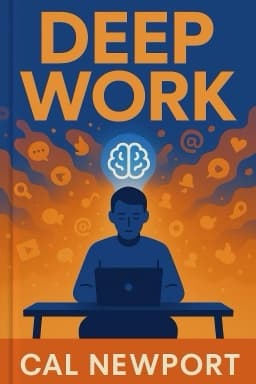
Why Your Open Office is Killing Your Focus — And What to Do About It
The surprising science behind why open offices drain your brainpower and how to reclaim your concentration.

Open offices have become the default in many companies, championed for their promise to foster collaboration and creativity. Yet, beneath the buzzwords lies a hidden cost: a massive drain on your ability to concentrate deeply.
Scientific studies confirm what many experience firsthand—open offices increase noise and interruptions that shatter concentration. Even minor distractions cause the brain to switch contexts, leading to a loss of momentum and increased time to complete tasks. The cumulative effect is a significant reduction in the capacity for deep work.
Compounding this problem is the difficulty in measuring the true impact of distractions. Without clear productivity metrics, organizations often reward visible busyness—constant email checking, frequent meetings—over deep, focused effort. This dynamic fosters a culture where shallow work dominates, and deep work becomes rare.
To reclaim focus, both individuals and organizations must rethink their environments and norms. Simple interventions like creating quiet zones, using noise-canceling headphones, and scheduling uninterrupted blocks can make a difference. More importantly, leadership must model and legitimize deep work behaviors by setting expectations and protecting focused time.
Clear communication about availability and response times reduces unnecessary interruptions. Establishing social norms that respect deep work periods empowers everyone to engage in meaningful, high-value tasks without guilt or pressure.
Open offices need not be productivity killers if managed wisely. By understanding the cognitive costs and proactively designing for focus, you can transform your workspace into a place where deep work thrives.
Protect your attention—it is your most valuable asset in the modern workplace.
Explore more about the science of attention and workplace design from leading productivity experts and Cal Newport’s research. 1 , 3 , 4
Want to explore more insights from this book?
Read the full book summary