
7 Surprising Truths That Make Difficult Conversations Easier (Even If You're Terrified)
Unlock the Hidden Structure Behind Every Tough Talk and Transform Your Relationships

Unlock the Hidden Structure Behind Every Tough Talk
We’ve all been there: the moment you know you need to say something, but your heart races and your mind spins with what-ifs. What if they get angry? What if I make it worse? What if I lose the relationship? Most of us avoid these conversations until we can’t, and then we fumble through, hoping for the best. But what if there’s a science—and an art—to making these moments not just bearable, but transformational?
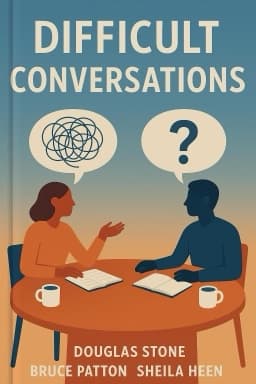
Difficult Conversations by Douglas Stone, Bruce Patton, and Sheila Heen is a masterclass in decoding the hidden architecture of tough talks. The authors, all Harvard Negotiation Project veterans, reveal that every difficult conversation is really three conversations in one: the ‘What Happened’ Conversation (our version of events), the Feelings Conversation (the emotions we’re wrestling with), and the Identity Conversation (what this means about us). Recognizing this structure is like finding a map in the dark—suddenly, you see the traps and the exits.
1. You’re Not Just Arguing About Facts—You’re Navigating Three Conversations
Most people believe conflict is about facts. But beneath every argument are swirling feelings and deep questions about who we are. When you realize this, you stop fighting about the surface and start addressing what’s really at stake. For example, a disagreement about project deadlines might actually be about feeling respected, or competent, or safe. Identifying these layers brings relief and clarity. 2
2. Certainty Is the Enemy—Curiosity Is Your Superpower
We get stuck because we’re convinced we’re right. But everyone’s reality is filtered by their experience. The book advocates the “And Stance”: My view matters, and so does yours. Instead of trading conclusions, ask, “Help me understand how you see this?” This simple shift melts defensiveness and opens the door to solutions nobody saw alone. 3
3. Most People Misread Intentions—And Pay the Price
We leap from feeling hurt to assuming the other person meant to hurt us. But intentions are invisible. When you share impact (“I felt dismissed when you said that”) and ask about intent, you create space for honesty and repair. Research shows that this move alone can turn a fight into a breakthrough. 4
4. Blame Is a Dead End—Contribution Is the Path Forward
Blame triggers shame and denial; mapping contribution invites learning. Instead of “Whose fault is this?” ask “How did we each play a role?” This approach reveals the system behind the problem and empowers both sides to change it. 2
5. Unspoken Feelings Are the Real Saboteurs
Most of us try to keep emotions out of tough talks, but feelings are the reason these conversations matter. Suppressed emotions leak out as sarcasm, withdrawal, or passive aggression. The book teaches how to name and express feelings safely, and how acknowledgment can transform the emotional climate instantly. 1
6. Identity Threats Are the Hardest Part—And the Most Transformational
When a conversation threatens your sense of competence or goodness, you’re likely to react defensively or withdraw. The authors show how to spot all-or-nothing thinking and practice self-compassion, turning identity threats into opportunities for growth. 3
7. The Power of the Learning Conversation
The real magic happens when you stop delivering messages and start asking for a learning conversation. “Can we talk about what happened? I’d like to understand your perspective.” This invitation changes the entire dynamic, making space for both voices and new solutions. 4
Conclusion: Every Conversation Is a Chance to Grow
Mastering difficult conversations isn’t about winning arguments—it’s about building trust, learning, and connection. Even small changes—like inviting curiosity or acknowledging feelings—can ripple out to change your relationships, your workplace, and your life. As you practice, remember: progress, not perfection. Each attempt is a step toward a more open, compassionate world.
Want to explore more insights from this book?
Read the full book summary