
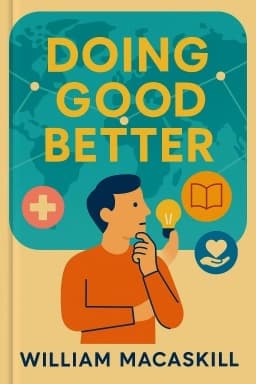
From Guilt to Empowerment: Why Ordinary People Can Change the World
How Anyone—Regardless of Wealth or Status—Can Make a Real Difference

It’s easy to feel overwhelmed by the world’s problems. Poverty, disease, injustice—these challenges seem too big for any one person to tackle. But Doing Good Better flips this narrative, showing that ordinary people have more power than they ever imagined.
Consider this: if you earn more than $52,000 a year, you are in the global 1%. Even modest donations, when directed wisely, can save lives or send children to school. The secret isn’t wealth or status—it’s using evidence and empathy to guide your actions.
Across the world, ordinary donors have funded malaria nets, deworming treatments, and clean water projects that have improved millions of lives. Teachers have inspired students to pursue impactful careers, while volunteers have advocated for policy changes that ripple through entire societies.
MacAskill’s message is clear: you don’t need to feel guilty or helpless—you can be empowered. Start by learning where your help is needed most. Use charity evaluators to find high-impact organizations. Consider how your career, your voice, and your habits can become engines of good.
The journey isn’t always easy. Doubt and skepticism are natural. But as the stories in Doing Good Better show, every step counts. Progress is possible, and it starts with you.
So if you’ve ever wondered whether you can really make a difference, remember: the answer is yes. Ordinary people, armed with the right tools and mindset, are changing the world every day.
Want to explore more insights from this book?
Read the full book summary