
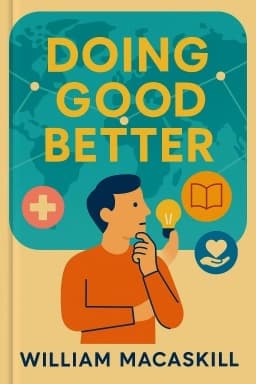
The Surprising Science Behind Doing Good: Why Your Charity Could Be 100x More Powerful
How Evidence and Empathy Can Transform the Way You Change the World

Imagine you had the power to save a life for less than the cost of a new smartphone. What if, with just a few thoughtful choices, you could do more good in the world than a hundred average donors combined? These aren't just hypotheticals—they're the real, evidence-backed opportunities revealed in Will MacAskill's groundbreaking book, Doing Good Better.
At the heart of the book is a simple but transformative idea: not all ways of helping are created equal. While every act of kindness matters, some do vastly more good than others. In fact, research shows that the best interventions can be up to 100 times more effective than typical ones. This means a single, well-placed donation can have the impact of a lifetime of unfocused giving.
But how do you tell which opportunities are truly effective? MacAskill introduces the philosophy of effective altruism, a movement that combines empathy with evidence. Instead of guessing or following trends, effective altruists use data, rigorous trials, and careful reasoning to identify where their time and money can do the most good. For example, while some charities spend millions on projects that look good in photos but fail in practice, others quietly save lives by distributing malaria nets or providing deworming treatments—proven interventions that dramatically improve health and education for pennies on the dollar.
One of the most eye-opening lessons from the book is the importance of the 100x multiplier. Because of global income differences, a dollar given to someone in extreme poverty can do up to 100 times more good than a dollar spent in a wealthy country. This isn't just a statistic—it's a call to action. By redirecting our resources to where they're needed most, we can literally save and transform lives.
Yet, good intentions aren't enough. MacAskill shares cautionary tales like the PlayPump, a water pump powered by children's play that was celebrated in the media but ultimately failed communities, wasting millions in donations. The lesson: evidence matters. Before giving, ask: How do we know this works? What does the data say? Are there rigorous studies to back up the claims?
Another key idea is the concept of neglectedness. The most popular causes often receive more funding than they need, while equally urgent but less visible problems go ignored. By focusing on neglected issues—like certain tropical diseases or overlooked humanitarian crises—you can have an outsized impact.
Ultimately, Doing Good Better challenges us to rethink what it means to help. It encourages us to be both generous and strategic, to ask hard questions, and to seek out the highest-impact opportunities. Whether you're a donor, volunteer, or just someone who cares, the book offers practical tools—and hope—for making a difference that truly matters.
Ready to change the world? Start by asking: How can I do the most good?
Want to explore more insights from this book?
Read the full book summary