
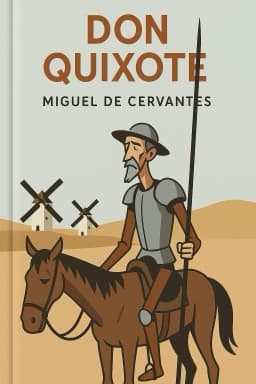
Don Quixote and the Art of Friendship: Lessons from a Knight and His Squire
Exploring the deep bond between Don Quixote and Sancho Panza and its timeless lessons on loyalty and human connection.

At the heart of Cervantes’ masterpiece lies a friendship that defies convention and enriches the narrative: the bond between Don Quixote and Sancho Panza. This relationship transcends the typical roles of master and servant, evolving into a profound brotherhood marked by loyalty, humor, and mutual growth.
Don Quixote, the visionary idealist, and Sancho Panza, the grounded pragmatist, complement each other perfectly. Their dialogues are a rich source of wisdom, exploring themes such as identity, the nature of reality, and morality.
One of the most striking aspects of their friendship is its evolution. Initially, Sancho joins Don Quixote motivated by promises of wealth and status, but over time, their shared experiences forge a bond that surpasses social and economic divides. They become true companions — brothers in spirit.
Their relationship also serves as a vehicle for philosophical reflection. Through their conversations, Cervantes invites readers to question the nature of truth and illusion, the limits of knowledge, and the importance of empathy. This dynamic makes the novel not just an adventure story, but a meditation on human connection.
In a world often divided by difference, the friendship of Don Quixote and Sancho Panza offers a hopeful vision of unity and understanding. It teaches us that true friendship embraces both ideals and realities, laughter and sorrow, dreams and pragmatism.
For anyone seeking insight into the complexities of human relationships, their story remains a timeless guide — a reminder that friendship is one of the most powerful forces in the human experience.
Sources: John Manders' Blog [[0]](#__0); EssayPro Don Quixote Summary [[1]](#__1)
Want to explore more insights from this book?
Read the full book summary