
Unlocking the Hidden Power of Motivation: Why Autonomy, Mastery, and Purpose Are Your True Drivers
Discover the science-backed secrets behind what truly motivates us beyond rewards and punishments.

For decades, the prevailing wisdom about motivation revolved around rewards and punishments — the 'if you do this, then you get that' model. This approach, rooted in what Daniel Pink calls Motivation 2.0, served well during the Industrial Age when routine tasks dominated work life. However, as our society has shifted towards knowledge work and creative problem-solving, this model increasingly falls short.
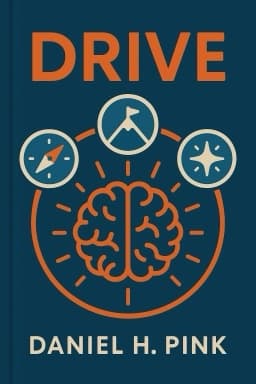
Enter Motivation 3.0 — a new operating system for human motivation based on three pillars: autonomy, mastery, and purpose. Autonomy means having the freedom to decide what to work on, when, how, and with whom. Mastery is the ongoing desire to improve skills and excel at meaningful tasks. Purpose connects our efforts to something larger than ourselves, giving deeper meaning to our work and lives.
Scientific experiments have demonstrated the limitations of extrinsic rewards. For example, children offered money to solve puzzles spent less time playing with them afterward, indicating a loss of intrinsic interest. Neuroscience reveals that monetary rewards activate dopamine pathways similar to addictive substances, which can lead to riskier behavior and reduced creativity.
Moreover, behavioral economics shows that humans are predictably irrational, often motivated by fairness and social context rather than pure self-interest. In the ultimatum game, people reject unfair monetary offers even at a personal cost, underscoring the importance of fairness and intrinsic values in motivation.
Organizations that embrace autonomy see happier, more productive employees. Google's famous '20% time' policy, allowing engineers to pursue passion projects, led to innovations like Gmail and AdSense. Similarly, companies adopting Results-Only Work Environments (ROWE) enable workers to choose their schedules and locations, focusing on results rather than presence.
Mastery requires deliberate practice and embracing a growth mindset — viewing challenges as opportunities to learn rather than threats. The concept of flow, where skill and challenge align perfectly, provides deep satisfaction and fuels motivation. Purpose-driven companies not only attract talent but also retain loyal customers by aligning business goals with social impact and meaningful causes.
Parents and educators can foster intrinsic motivation by encouraging effort over innate talent, separating chores from allowances to avoid transactional mindsets, and promoting teaching as a way to deepen mastery.
Ultimately, the third drive is a hopeful vision for the future — one where motivation is not coerced but cultivated, where work is not just endured but embraced, and where individuals and organizations thrive through connection, creativity, and meaning.
Embracing autonomy, mastery, and purpose is not just a strategy for success; it’s a pathway to a more fulfilling and engaged life.
Want to explore more insights from this book?
Read the full book summary