
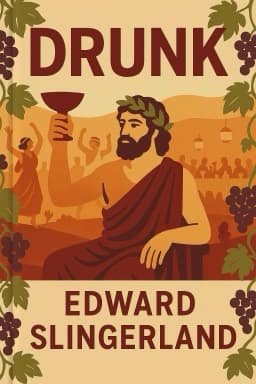
Why Do We Get Drunk? The Evolutionary Secrets Behind Alcohol and Human Creativity Revealed!
Uncover the deep evolutionary roots of alcohol use and how it sparked human creativity and social cooperation.

Alcohol has been part of human life for tens of thousands of years, yet the question remains: why do we have this persistent drive to alter our minds with intoxication despite its clear risks? This blog explores the evolutionary, biological, and cultural reasons behind our universal thirst for alcohol, revealing a story that intertwines human creativity, social bonding, and the very origins of civilization.
Scientific research shows that alcohol consumption predates agriculture by thousands of years. Early humans were brewing and consuming fermented beverages over 12,000 years ago, indicating that intoxication was not a mere byproduct of farming but a driver of social rituals and communal life. Even fruit flies, among the tiniest creatures, show a preference for alcohol and increase their consumption when deprived of mating opportunities, hinting at deep biological reward systems linking reproduction and intoxication.
The evolutionary puzzle is profound: why would natural selection favor a behavior that causes cognitive impairment, health risks, and social problems? Two main theories attempt to explain this. The 'hijack' theory suggests alcohol tricks the brain’s reward circuits originally designed for adaptive behaviors like eating and reproduction, creating a false sense of fitness benefit. The 'hangover' theory posits that alcohol once served useful functions such as calorie provision or food preservation but became maladaptive with modern potent drinks.
Yet, the persistence and cultural centrality of alcohol suggest it serves important adaptive roles. Humans have evolved enzymes to metabolize alcohol efficiently, and cultures worldwide have developed rituals celebrating intoxication. Intoxication relaxes the prefrontal cortex, the brain’s center for cognitive control, allowing freer associative thinking and creativity similar to the cognitive flexibility seen in children. This relaxation fosters lateral thinking and sudden insights, fueling artistic and innovative breakthroughs.
Socially, communal intoxication functions as a powerful glue, lowering inhibitions and fostering emotional honesty. Shared drinking rituals helped build trust and cooperation among early humans, enabling larger and more complex societies to form. Mythologies from Sumer and Egypt highlight the civilizing role of beer and wine, underscoring intoxication’s cultural importance.
Despite these benefits, alcohol carries significant risks. Health issues like liver disease, cognitive impairment, and social harms such as violence and addiction challenge societies to find balance. Genetic adaptations like the Asian flushing gene cause unpleasant reactions to alcohol, naturally limiting consumption in some populations. Cultural norms and rituals also regulate drinking, encouraging moderation and mitigating harm.
Modern advances like distillation have increased alcohol potency, while social changes have shifted drinking from communal to solitary contexts, raising new challenges. However, ancient wisdom persists through mindful drinking practices, small cup rituals, and sober social venues that leverage placebo effects to simulate social bonding without intoxication’s dangers.
In sum, intoxication is a deeply rooted human behavior with evolutionary, biological, and cultural significance. It has shaped our creativity, social structures, and civilization itself. Understanding why we get drunk offers valuable insights into human nature and guides us toward healthier, more balanced relationships with alcohol.
For further reading, explore cutting-edge research on evolutionary perspectives of alcohol consumption and its molecular underpinnings by the National Institutes of Health and scientific journals.
Sources:
1
,
2
,
3
,
4
Want to explore more insights from this book?
Read the full book summary