
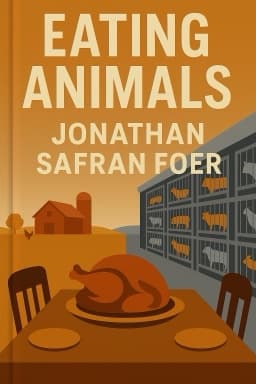
Why Eating Animals Will Change How You See Your Plate Forever
Unveiling the Hidden Stories Behind Our Food and Why It Matters More Than Ever

Every bite we take is steeped in stories—stories of survival, culture, ethics, and environment. 'Eating Animals' peels back the layers of these stories, inviting us to reconsider not just what we eat, but why and how. It begins with the intimate memories of family kitchens, where food is a vessel of love and history, then leads us into the shadowy world of factory farms where billions of animals live and die in industrial anonymity.
Consider the grandmother who survived wartime scarcity, transforming humble ingredients into nourishing meals that carried lessons of gratitude and resourcefulness. Or the babysitter who refused to eat chicken because she 'didn't want to hurt anything,' sparking a lifelong moral inquiry. These personal anecdotes remind us that food is deeply intertwined with identity and values.
Yet, the modern industrial system tells a very different story—one of scale, efficiency, and cost-cutting that often ignores the suffering of animals and the health of our planet. Factory farms confine animals in cramped, mechanized environments, genetically engineering chickens to grow unnaturally fast, causing immense physical pain. This system accounts for more greenhouse gas emissions than all transportation combined, devastating ecosystems and contributing to global health risks such as pandemics.
Scientific research reveals that animals like pigs and chickens possess cognitive abilities comparable to primates, capable of problem-solving, social learning, and emotional expression. This knowledge forces us to question the species barriers that justify their treatment and consumption.
However, the story is not without hope. Family farms and humane slaughterhouses offer models that prioritize animal welfare and sustainability, demonstrating that ethical food production is possible. Cultural traditions, too, evolve, allowing us to rewrite the narratives we tell about food in ways that honor compassion and environmental stewardship.
Ultimately, 'Eating Animals' challenges us to embrace complexity and conscientious inconsistency, recognizing that the journey toward ethical eating is ongoing and personal. Our food choices shape who we are and the future we create—for ourselves, animals, and the planet.
This exploration is drawn from multiple perspectives and supported by scientific studies, cultural analysis, and personal stories, making it a compelling call to mindful eating in a modern world. 1 2 4
Want to explore more insights from this book?
Read the full book summary