
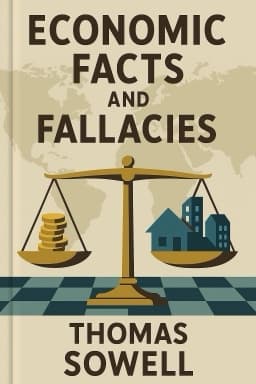
The Economic Myths That Keep Us Stuck: What You Didn’t Know About Money and Markets
Unraveling the common economic fallacies that shape our world and how to think beyond them.

In the vast world of economics, many of the ideas we hold as truths are actually myths that have stubbornly persisted despite overwhelming evidence to the contrary. These economic fallacies—like the zero-sum fallacy, which suggests one person's gain is always another's loss, or the fallacy of composition, which assumes what is good for a part must be good for the whole—have profound effects on how societies craft policies and how individuals understand their financial world.
Imagine a bustling city where rent control is imposed to help tenants. While well-intentioned, such policies often lead to housing shortages and deteriorating living conditions because they restrict supply and reduce landlords' incentives to maintain properties. This is a classic example of how economic myths can lead to unintended consequences. Similarly, labor laws that mandate higher wages without considering market conditions can increase unemployment by making it more expensive for employers to hire, especially workers with fewer skills.
These fallacies are not just academic; they shape real lives. The misconception that economic transactions are a battle where one side wins and the other loses ignores the fundamental principle that voluntary trade benefits all parties involved. When governments or individuals act on these false beliefs, they often create inefficiencies that harm the very people they intend to help.
Another persistent myth is the post hoc fallacy—the idea that because one event follows another, the first caused the second. This misleading logic has led to countless misattributions in economic policy, such as blaming a stock market crash for an economic depression without considering subsequent policy errors that exacerbated the downturn.
Breaking free from these myths requires more than just knowing facts; it demands critical thinking and a willingness to question deeply held beliefs. By embracing evidence-based reasoning and understanding the complex interactions within economies, individuals and policymakers can avoid costly mistakes and foster environments where prosperity can flourish.
As you continue your journey through economic understanding, remember that knowledge is a dynamic pursuit. The myths we shed today pave the way for clearer insights tomorrow.
For further reading, explore insights from top economic thinkers and books that challenge conventional wisdom, such as those recommended by leading institutions and experts in the field.
Sources: sobrief.com, FiveBooks Economics, LSE Review of Books
Want to explore more insights from this book?
Read the full book summary