
From Mountain Shadows to Ivy Halls: The Unbelievable True Story of Survival and Self-Education
How One Woman Broke Free From Isolation, Abuse, and Ignorance to Discover the Power of Education

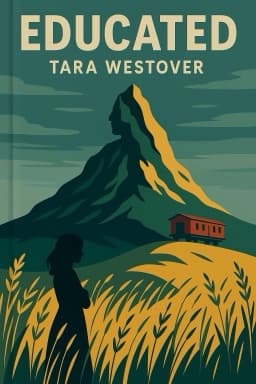
Imagine a childhood spent in a remote mountain valley, where the government is a shadowy enemy, education is a threat, and survival means preparing for the end of the world. This was the reality of one young woman, born into a survivalist Mormon family in rural Idaho, whose story unfolds in the memoir Educated. Raised without birth certificates, formal schooling, or medical records, her early life was marked by isolation, physical labor, and a strict adherence to her father’s apocalyptic worldview.
Her mother, a midwife without formal certification, blended herbal medicine and faith-based healing, delivering babies by candlelight and muscle testing. This unconventional upbringing, steeped in distrust of institutions and a fierce belief in self-reliance, set the stage for a life of contradictions and challenges. The family’s stockpiling of rifles and canned peaches was less paranoia than a profound faith in their survivalist mission.
Yet beneath this hard exterior lay a fragile family dynamic, complicated by the father’s undiagnosed bipolar disorder and the presence of abuse that was often denied or minimized. The emotional fractures carved deep wounds, making the author’s eventual escape both a physical and psychological journey.
Despite these obstacles, a spark of curiosity ignited within her. Using old books and music CDs, she began a secret education, reading religious texts and classical music to nurture her mind. This passion grew into a desire to attend public school — a request met with resistance but ultimately the first step toward emancipation.
Her leap into formal education was daunting. Without transcripts or prior schooling, she faced skepticism but excelled academically, winning scholarships and proving that knowledge could be a powerful tool for liberation. Navigating two worlds — the mountain’s cyclical rhythms and the academic’s critical thinking — she grappled with feelings of alienation and identity conflict.
Ultimately, her journey is a testament to the power of education not just to impart knowledge, but to heal, forgive, and redefine one’s self. Receiving her delayed birth certificate symbolized the legal and emotional recognition of her identity. Understanding her father’s mental illness fostered compassion and closure. This memoir is a universal story of courage, resilience, and the unyielding pursuit of truth and freedom.
For anyone who has ever felt trapped by their past or uncertain of their future, this story offers hope — that through knowledge, healing, and forgiveness, we can all write new chapters in our lives.
Sources include insightful psychological analyses, memoir reviews, and educational perspectives that deepen our understanding of this remarkable journey. 1 2 3 4
Want to explore more insights from this book?
Read the full book summary