
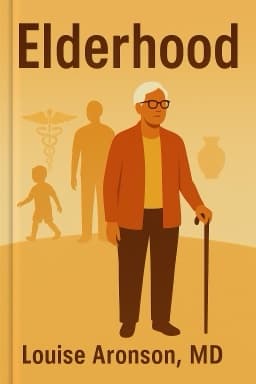
Why We Must Rethink Aging: The Hidden Truths Behind Elderhood You Never Knew
Discover the surprising realities of aging and how society and medicine often get it wrong.
Aging is often portrayed as a uniform decline, a slow march towards frailty and dependence. But what if this narrative is not only incomplete but misleading? In this extensive exploration, we uncover the nuanced realities of elderhood—from childhood memories that shape our earliest perceptions of aging, to the blind spots in medical education, to the pervasive societal biases that other and exclude elders.
Our journey begins in childhood, where the seeds of how we view aging are planted. Early experiences with grandparents or elderly family members embed subconscious attitudes that influence how we treat and understand elders later in life. These impressions are often framed by cultural scripts that limit the roles and behaviors expected of older adults, especially widows or those perceived as frail.
Transitioning to the world of medicine, we find a system that paradoxically marginalizes the very population it serves most. Medical training prioritizes the healthy young adult as the 'normal' patient, leaving future doctors ill-equipped to address the complex needs of older adults. This results in misdiagnoses, inappropriate treatments, and fragmented care that can worsen health outcomes for elders.
Society at large compounds these challenges through ageism—a normalized prejudice that paints elders as 'other,' separate from and less valuable than younger generations. Media, language, and cultural narratives reinforce stereotypes of frailty and obsolescence, further isolating elders and diminishing their voice and visibility.
Yet, elderhood is far from monolithic. It is a period marked by remarkable diversity, where some eighty-year-olds run marathons and lead communities, while others face significant health challenges. Dementia, often feared as inevitable, does not affect all elders, underscoring the need to challenge stereotypes and appreciate individual experiences.
Medical care must adapt accordingly. The risks of polypharmacy and the dangers of applying protocols designed for younger adults highlight the necessity of tailored, holistic approaches that consider each elder's unique physiology, goals, and social context.
Beyond medicine, social and emotional dimensions play a critical role. Strong social connections and emotional resilience contribute significantly to health and longevity, enabling elders to navigate loss and change with dignity and joy.
Finally, embracing death and legacy as natural, meaningful parts of elderhood allows for a dignified final act—one that offers peace to elders and lasting gifts of wisdom and values to future generations.
Reimagining aging in this way transforms elderhood from a time to be endured into a stage rich with potential, meaning, and contribution. It challenges us to confront our biases, reform medical education, and build societies that honor all ages.
This perspective is supported by extensive research and expert analysis, including insights from Stanford's Longevity Center, anthropological reviews of aging, and critical examinations of ageism in healthcare and society. 1 2 3
Want to explore more insights from this book?
Read the full book summary