
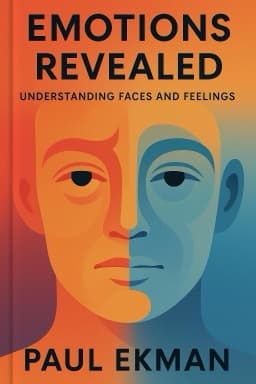
Unlocking the Secret Language of Emotions: How to Read Faces and Transform Your Life
Discover the Hidden Power of Your Facial Expressions and Emotional Signals

Have you ever wondered if the smile you see is truly one of joy or merely a polite mask? Or why sometimes a person’s words say one thing, but their face tells a different story? The answer lies in the universal language of emotions, spoken fluently through our facial expressions, often without us realizing it. This is the fascinating world unveiled by Paul Ekman, whose decades of research have shown that emotions are not just personal feelings but biological signals shared across humanity.
Ekman’s studies in isolated tribes with no exposure to modern media revealed that people all over the world express seven basic emotions—happiness, sadness, anger, fear, surprise, disgust, and contempt—in the same way. This universality suggests that these expressions are hardwired into our biology, a legacy of evolution that helps us communicate important information quickly and effectively.
But there is more beneath the surface. Culture shapes how and when we express these emotions, through what Ekman calls “display rules.” For example, some societies encourage masking negative emotions with a smile in public, while others allow more open expression. Understanding these nuances can help us navigate social situations with greater empathy and insight.
One of the most intriguing discoveries is the concept of microexpressions—brief, involuntary facial expressions that reveal true emotions someone might try to hide. Imagine a poker player whose fleeting look of fear betrays their hand, or a colleague whose quick flash of contempt undermines their polite words. Learning to spot these microexpressions can be a powerful tool in both personal and professional contexts.
Emotions also ignite rapidly, often before we are even aware of them. Our brains have automatic appraisal systems that scan our environment and trigger feelings within milliseconds, preparing us to respond to threats or opportunities. This rapid onset explains why emotions sometimes seem to come out of nowhere, overwhelming our conscious control.
Yet, changing what triggers our emotions is challenging. Deeply ingrained neural connections resist erasure, and once an emotion starts, contradictory information is often ignored during a refractory period. However, with mindful awareness, journaling, and cognitive reappraisal, we can gradually weaken these triggers and improve emotional regulation.
Expressing emotions is a dance between involuntary signals and conscious control. While we cannot fully hide our feelings, we can learn to moderate our expressions and actions, improving communication and reducing conflict. Our voice, body language, and facial expressions all play roles in conveying emotion, sometimes revealing more than words.
Each emotion has unique triggers, expressions, and social functions. Sadness signals loss and invites support, anger mobilizes us to overcome obstacles, fear prepares us for threats, and happiness strengthens social bonds. Recognizing these patterns deepens our understanding of ourselves and others.
Importantly, people differ in how quickly and intensely they experience emotions and how long they take to recover. These individual differences shape our relationships and emotional management strategies.
Developing emotional awareness—the ability to notice emotions as they arise—is a crucial skill. By tuning into bodily sensations and practicing mindfulness, we gain the power to respond thoughtfully rather than react impulsively.
Finally, using emotional insight to recognize feelings in others enhances empathy and connection. Microexpressions and vocal cues reveal hidden emotions, fostering trust and compassion.
Embracing our emotions with awareness and balance allows us to live fully and authentically. They motivate our choices, enrich our relationships, and guide our personal growth. This journey into the secret language of emotions is not just academic; it is a path to deeper connection and fulfillment.
Whether you are looking to improve your relationships, understand yourself better, or simply be more emotionally intelligent, the insights from this research offer timeless wisdom and practical tools. Start by observing the faces around you—what stories do they tell?
References:
1. Emotions Revealed by Paul Ekman
2. Amazon reviews and summaries of Ekman’s work
3. ThorProjects emotional awareness review
4. Goodreads insights on emotional universality
Want to explore more insights from this book?
Read the full book summary