
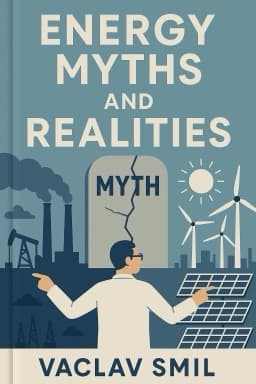
7 Energy Myths That Are Holding Us Back (And What We Should Really Believe!)
Revealing the misconceptions that shape our energy debates—and what science really says about the future.

Every day, headlines trumpet the latest energy breakthrough or disaster. Politicians promise a quick fix, activists warn of imminent collapse, and tech visionaries assure us that salvation is just one innovation away. But what if much of what we believe about energy is wrong? In this deep dive, we’ll explore seven of the most stubborn energy myths—ideas that shape our debates, policies, and investments, but rarely stand up to scrutiny.
Myth #1: Energy Transitions Happen Fast
It’s tempting to think that, just as smartphones replaced landlines in a decade, we can swap fossil fuels for renewables almost overnight. In reality, every major energy transition—from wood to coal, coal to oil, oil to gas—has taken generations. Infrastructure, habits, and economies move slowly. Even with massive investment, the shift to sustainable energy will be measured in decades, not years. Patience, not panic, is the real driver of progress.
Myth #2: Efficiency Always Reduces Consumption
More efficient cars, lights, and factories should mean less energy use, right? Unfortunately, history tells a different story. As energy becomes cheaper and more accessible, we tend to use more of it—a phenomenon known as the Jevons Paradox. The lesson? Efficiency is vital, but not a silver bullet.
Myth #3: Miracle Technologies Will Save Us
From fusion reactors to carbon capture, every decade brings a new promised miracle. Yet, most energy breakthroughs advance slowly and face daunting technical, economic, and social barriers. Betting on miracles is a recipe for disappointment—and delay.
Myth #4: Peak Oil Means Imminent Crisis
For over half a century, experts warned that the world would soon run out of oil. But new discoveries, unconventional sources, and technological advances keep pushing the peak further away. More importantly, high prices drive efficiency and substitution. The real challenge isn’t running out, but managing abundance responsibly.
Myth #5: Nuclear Power Is Too Cheap to Meter
Once hailed as the solution to all our energy woes, nuclear power fell short due to cost overruns, accidents, and public opposition. While it remains a vital low-carbon source in some countries, its future depends on overcoming real—not mythical—barriers of safety, cost, and public trust.
Myth #6: Small-Scale Renewables Can Replace Everything
Solar panels on every roof and wind turbines in every field are inspiring, but they can’t meet the needs of energy-hungry cities and industries alone. Decentralized renewables are important, but must work alongside large-scale solutions.
Myth #7: Carbon Capture Is a Quick Fix
Burying CO2 underground sounds simple, but the scale required is immense and the technology largely unproven at global scale. Relying on CCS risks delaying real change.
Confronting these myths isn’t about pessimism—it’s about clarity. Only by facing reality can we build a sustainable energy future, step by steady step.
Want to explore more insights from this book?
Read the full book summary