
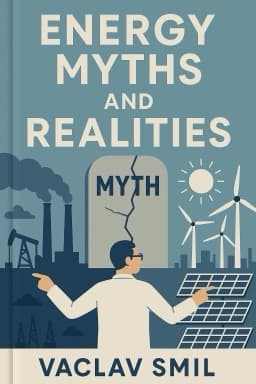
Debunked: The Real Story Behind Electric Cars, Nuclear Power, and Soft Energy Dreams
What history and science really tell us about our favorite energy solutions.

Electric cars promise a future free of oil, but did you know they outsold gasoline cars in the early 1900s? Their fall from grace was due to range limitations, battery costs, and the rise of mass-produced gasoline cars. Even today, EVs make up less than 10% of the global fleet, despite massive hype and investment. Their future depends not just on better batteries, but on greening the entire grid.
Nuclear power, once heralded as 'too cheap to meter,' soared in the 1950s and 60s, only to stall amid cost overruns, safety fears, and accidents. While some countries rely on it for low-carbon power, others have abandoned it. The debate continues: can new designs and better safety revive nuclear, or will old challenges persist?
The soft energy dream—solar panels on every roof, wind turbines in every field—remains compelling. But small-scale renewables provide less than 1% of U.S. primary energy. They work best as part of a diverse mix, not as a replacement for large-scale infrastructure.
The lesson? Every energy solution has trade-offs. Real progress comes from understanding these, not chasing myths.
Want to explore more insights from this book?
Read the full book summary