
How to Master Reiki Symbols and Attunements: The Ultimate Guide for Healers
Unlock the sacred power of Reiki symbols and understand the transformative attunement process to become a confident healer.

Reiki symbols are sacred glyphs that serve as powerful tools to amplify, direct, and deepen healing energy. Among the most important are Cho-Ku-Rei, known as the power symbol; Sei-He-Ki, the emotional healer; and Hon-Sha-Ze-Sho-Nen, which enables distance and karmic healing. The Master symbol, Dai-Ko-Myo, represents spiritual mastery and joy, used in advanced healing and attunements.
However, these symbols are not effective simply by drawing or memorizing them. They require activation through attunements—a sacred initiation process performed by a Reiki Master. Attunements clear and open the healer’s aura, embedding the symbols as energetic imprints that channel Reiki energy with precision and potency.
The attunement process involves the Master controlling their breath and performing the Hui Yin contraction, creating a direct energy current that flows into the student. Sacred symbols are drawn and blown into the student’s aura, opening energy channels and expanding their capacity to channel Reiki energy.
Receiving an attunement often triggers emotional and physical detoxification as karmic blocks are released. This cleansing supports spiritual growth and prepares the healer for deeper practice. Intent and respect are paramount when using symbols; they function as energetic keys but require the healer’s focused intention and connection to Reiki guides to work safely and effectively.
Whether performing hands-on healing, distance sessions, or self-treatment, symbols enhance the flow and direction of Reiki energy. Mastery of these symbols and understanding the attunement process are essential steps on the path to becoming a confident and effective Reiki practitioner or teacher.
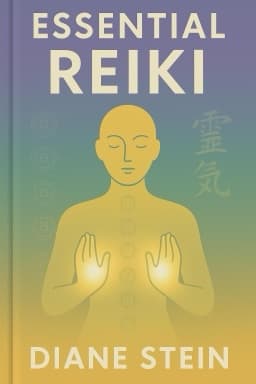
Sources: Essential Reiki by Diane Stein, RT Book Reviews, Essential Reiki official site, Truandwell Reiki book reviews 2 , 1 , 3 , 4
Want to explore more insights from this book?
Read the full book summary