
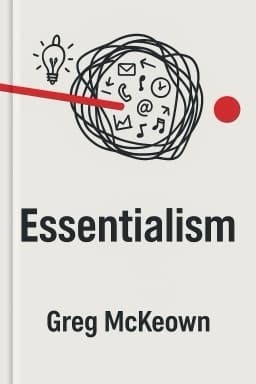
The Secret Science Behind Doing Less and Achieving More
Explore the neuroscience and psychology that prove why Essentialism works.

At first glance, the idea of doing less to achieve more might seem counterintuitive. Yet, science reveals that this approach aligns perfectly with how our brains function and how we process information.
Learned helplessness, a psychological condition where repeated exposure to uncontrollable events leads to passivity, explains why many feel overwhelmed and powerless. Recognizing this phenomenon is the first step toward reclaiming your agency and making intentional choices.
Neuroscience shows that
The Pareto Principle is more than an economic observation; it’s a reflection of a power law distribution found in nature and human performance. Studies reveal that the top performers in many fields are exponentially more productive than their peers, highlighting the importance of focusing on high-leverage activities.
Information overload, a hallmark of modern life, impairs our ability to discern signal from noise. Our brains are wired to filter and prioritize, but constant distractions fragment attention and increase decision fatigue. Journaling and creating solitude help restore mental clarity by externalizing thoughts and providing space for reflection.
Sleep is the unsung hero of productivity. Research shows that adequate sleep improves memory consolidation, enhances creativity, and sharpens decision-making. Lack of sleep leads to impaired cognitive function and emotional regulation, undermining efforts to live intentionally.
By integrating these scientific insights, Essentialism becomes more than a philosophy — it becomes a strategy grounded in how we are wired to thrive. Embracing this approach helps you harness your brain’s natural strengths and avoid common pitfalls of modern life.
Understanding the science behind Essentialism empowers you to take deliberate steps toward a focused, creative, and balanced life.
Want to explore more insights from this book?
Read the full book summary