
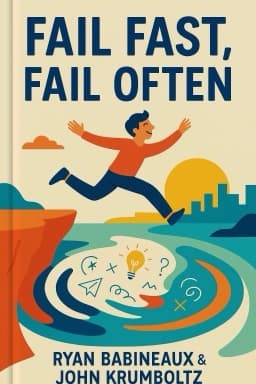
The Happiness Hack: How ‘Fail Fast, Fail Often’ Flips the Script on Success
Discover the Science Behind Why Action—Not Planning—Leads to Joy

We spend so much time trying to avoid mistakes, thinking that happiness lies on the other side of perfection. But what if joy is actually born from imperfection, risk, and action? According to 'Fail Fast, Fail Often,' the happiest people are those who act quickly and often, learning from each small misstep. This isn’t just motivational fluff—it’s backed by science. Studies show that action creates positive emotions, and positive emotions make us more resilient, creative, and open to new experiences.
The book’s authors cite research on the positivity ratio: flourishing people experience three positive emotions for every negative one. How do they get there? Not by waiting for perfect circumstances, but by filling their days with small adventures, playful risks, and frequent experiments. Each action, even a failed one, becomes a source of joy and learning.
One practical takeaway: keep a 'Fun to Try' list and act on your curiosities immediately. Don’t wait for the right time to learn guitar, start a side project, or visit a new place. The spark of curiosity fades if you don’t feed it with action. And when you do act, don’t aim for perfection—aim for progress. Celebrate every small win, and see mistakes as valuable data, not judgments on your worth.
Community plays a crucial role, too. The happiest people seek out feedback, share their goals, and surround themselves with supporters who encourage experimentation. This social learning accelerates growth and makes the journey more joyful.
So if you want to hack your own happiness, stop waiting for certainty and start acting boldly. The more you do, the happier—and more successful—you’ll become.
Take the leap. Your next adventure—and your next burst of happiness—awaits on the other side of your comfort zone.
Want to explore more insights from this book?
Read the full book summary