
Why Failing Fast Is the Secret Sauce to a Happier, More Successful Life
How Letting Go of Perfectionism and Embracing Mistakes Can Transform Your Life

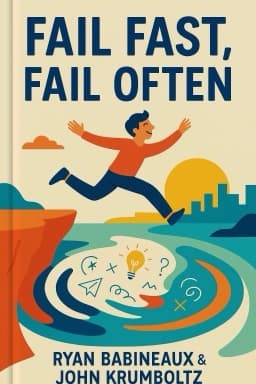
Most of us have been taught to avoid mistakes at all costs. From our earliest school days, we’re rewarded for the right answers and penalized for the wrong ones. But what if this mindset is holding us back from the very growth, happiness, and creativity we crave? In 'Fail Fast, Fail Often,' Babineaux and Krumboltz argue that the real enemy isn’t failure—it’s our fear of failing. The happiest, most successful people aren’t those who never stumble, but those who stumble often and keep moving forward. They treat life like a series of joyful experiments, not a high-stakes exam.
Consider the story of a ceramics class divided into two groups: one told to make the perfect pot, the other to make as many pots as possible. The quantity group, free to make mistakes, ended up producing the most beautiful work. This experiment, referenced in the book, is a metaphor for all learning and growth. When you act quickly, try new things, and let yourself be bad at first, you learn faster and discover more opportunities than if you wait for the perfect plan.
But it’s not just about work or creativity. The book reveals that people who fill their lives with playful action—trying new hobbies, striking up conversations, exploring new places—report higher levels of happiness and fulfillment. Positive psychology research backs this up: flourishing individuals maintain a 3-to-1 ratio of positive to negative experiences, and much of that positivity comes from taking risks and embracing novelty.
So how do you put this into practice? Start by shrinking your decisions. Instead of overthinking your next career move, try shadowing someone in the field for a day. Instead of planning a perfect novel, write a messy first draft. Keep a 'Fun to Try' list and act on your curiosity immediately—before the spark fades. And most importantly, surround yourself with supportive people who celebrate your efforts, not just your results.
By making failure your friend, you’ll not only accelerate your learning—you’ll also unlock a life of greater joy, resilience, and adventure. So next time you’re tempted to wait for the perfect moment, remember: progress belongs to those who are willing to fail fast and fail often.
Ready to start your own joyful experiment? The journey begins with your next imperfect step.
Want to explore more insights from this book?
Read the full book summary