
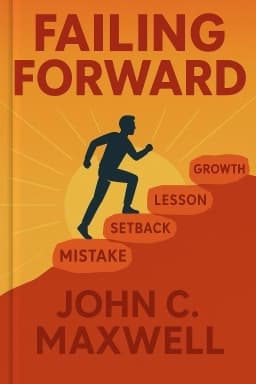
Why Failing Forward is the Secret Superpower of High Achievers
Unlocking the Hidden Power of Every Setback

Unlocking the Hidden Power of Every Setback
Imagine a world where every mistake is not a mark of shame, but a badge of progress. In the realm of high achievers, this isn’t just a dream—it’s the reality that separates the good from the great. Failing forward is the art of turning setbacks into setups for future success. Instead of fearing failure, the most successful people in history have learned to embrace it as a necessary companion on the journey to achievement.
Consider the story of a young entrepreneur who launched four businesses before finally finding the one that took off. Or the Olympic athlete who missed more shots than she scored but became a legend through relentless persistence. These stories are not exceptions—they are the rule among those who reach the top of their fields. The difference lies in one simple shift: seeing failure as a process, not a verdict.
Research in psychology supports this mindset. Dr. Carol Dweck’s work on the growth mindset shows that people who believe abilities can be developed are more likely to embrace challenges and persist after setbacks. In contrast, those with a fixed mindset see failure as evidence of inherent inadequacy, leading to avoidance and stagnation.
But how do you make this shift? It begins with redefining what failure means. Instead of asking, 'What did I do wrong?' ask, 'What can I learn from this?' By viewing mistakes as feedback—not as reflections of your worth—you free yourself to experiment, innovate, and grow.
One practical strategy is to adopt a 'mistake quota.' Some of the world’s best trainers actually encourage their students to make a certain number of errors before mastering a skill. This approach transforms the fear of failure into a playful curiosity, unlocking creativity and resilience.
Of course, the journey isn’t always easy. The cycle of fear can be paralyzing—when you avoid challenges, you reinforce your anxieties and miss out on growth. The solution? Take action, even when you don’t feel ready. Studies reveal that motivation often follows action, not the other way around. Each small step forward builds momentum and confidence, gradually breaking the hold of fear.
Equally important is learning to separate your self-worth from your outcomes. You are not your mistakes. High achievers understand that setbacks are events, not identities. This resilience allows them to bounce back, reflect, and try again with renewed energy.
Responsibility is the final piece of the puzzle. Blaming others keeps you stuck; owning your journey gives you the power to change. When you take responsibility for your actions, you become the author of your own story, able to rewrite the ending no matter where you started.
Perhaps the most beautiful part of failing forward is its ripple effect. As you transform your own mindset, you inspire those around you to do the same. Servant leaders—those who lift others as they climb—create teams, families, and communities that thrive on mutual support and continuous growth.
In the end, failing forward is not just a technique; it’s a way of life. It’s the secret superpower that turns every setback into a stepping-stone, every mistake into a masterpiece. Embrace it, and watch your world—and the worlds of those around you—transform.
Want to explore more insights from this book?
Read the full book summary