
From Puritans to Post-Truth: The Evolution of American Belief Systems
Tracing the Spiritual and Cultural Currents That Shaped America’s Unique Belief Landscape

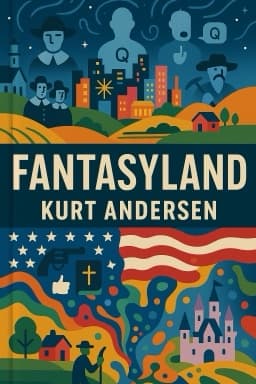
America’s religious and cultural beliefs have always been a complex tapestry of fervor, innovation, and sometimes contradiction. Kurt Andersen’s Fantasyland traces this evolution over five centuries, revealing how early spiritual ideals morphed into the diverse and often fantastical belief systems that characterize modern America.
The journey begins with the Puritans, whose literal interpretation of the Bible and expectation of the apocalypse instilled a culture of intense personal conviction and communal zeal. This foundation empowered individualism in faith, setting the stage for America’s unique religious landscape.
The Great Awakenings brought emotional revivalism, where personal spiritual experience and theatrical preaching redefined Christianity. Figures like Joseph Smith introduced new religious narratives blending folk magic and revelation, exemplifying the American capacity for religious reinvention.
The 19th century’s cultural delirium mixed religion with pseudoscience and utopian experiments, reflecting a society eager to explore new frontiers of belief and community. This period also saw the rise of evangelicalism as a political force, reshaping the nation’s moral and cultural debates.
Today, these historical currents converge in a post-truth era where emotion often outweighs fact, and conspiracy theories influence politics and society. Understanding this lineage is vital for addressing the challenges of polarization and misinformation that threaten democratic discourse.
For more insights, readers can explore reviews and summaries from Seeking Alpha and Reddit discussions that critically engage with Andersen’s thesis.
Sources:
1
,
4
Want to explore more insights from this book?
Read the full book summary