
Inside America’s Fantasy Factory: How Media and Belief Shape Our World
Unmasking the Fantasy-Industrial Complex That Defines Modern America

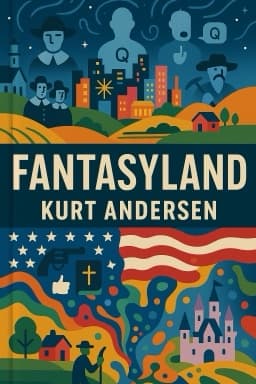
In the age of screens and streams, America has become a sprawling fantasy factory, where the boundaries between what’s real and what’s imagined dissolve into a kaleidoscope of images, narratives, and experiences. Kurt Andersen’s Fantasyland reveals how media and technology have played a pivotal role in this transformation, turning the nation into a stage where fantasy is not just entertainment but a force that shapes identity, politics, and belief.
Reality television emerged as a groundbreaking genre that disrupted traditional storytelling by blending scripted elements with real-life drama. This format challenged viewers’ notions of authenticity, creating a new kind of spectacle where personal lives became public theater. Simultaneously, Disney’s creation of immersive theme parks and media franchises crafted idealized fantasy worlds that captivated generations, reinforcing cultural narratives of youth, happiness, and escapism.
The internet revolutionized the landscape further by democratizing access to information and belief. Online platforms enabled niche communities to form around shared fantasies and conspiracy theories, fostering echo chambers that amplified misinformation and radicalized views. Social media algorithms, designed to maximize engagement, often prioritize sensational content, blurring the line between truth and fiction.
This fantasy-industrial complex extends beyond entertainment into politics and religion, where media spectacles and digital narratives influence public opinion and electoral outcomes. The blending of news and entertainment creates a feedback loop that reinforces partisan identities and deepens polarization.
Understanding these dynamics is essential for navigating today’s complex media environment. Andersen’s work encourages us to critically examine the content we consume and the beliefs we hold, recognizing the powerful role media plays in constructing our realities.
For further reading, consider analyses from The National Book Review and Bookey, which contextualize the media’s influence in America’s cultural evolution.
Sources:
2
,
3
Want to explore more insights from this book?
Read the full book summary