
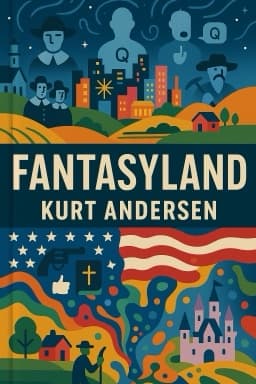
Why America’s Fantasyland Is More Relevant Than Ever: Lessons for Today’s World
Understanding America’s Historical Fantasy to Navigate Its Present and Future

America’s journey through fantasy is not just a historical curiosity—it is a living, breathing force that continues to shape the nation’s identity and politics. Kurt Andersen’s Fantasyland illuminates how centuries of cultural patterns have culminated in today’s post-truth era, where belief often supersedes fact and political discourse is deeply polarized.
The rise of social media has turbocharged the fantasy-industrial complex, creating echo chambers that reinforce partisan identities and spread misinformation at unprecedented speeds. Conspiracy theories once confined to the fringes now influence mainstream political debates, affecting elections and public policy.
Understanding the historical roots of America’s fantasy culture helps explain why these phenomena resonate so strongly. The nation’s foundational values of individualism, religious freedom, and media spectacle have created fertile soil for diverse and competing realities to coexist.
Addressing these challenges requires more than fact-checking; it demands a cultural reckoning with the ways belief and fantasy function in American life. Promoting media literacy, fostering dialogue across divides, and encouraging critical engagement with information are vital steps toward rebuilding a shared reality.
As we navigate this complex landscape, Andersen’s work serves as both a warning and a guide, reminding us that while fantasy can inspire and uplift, it also requires careful stewardship to prevent the unraveling of social trust and democratic institutions.
For deeper perspectives, readers can consult analyses from The National Book Review and Reddit forums that debate the implications of Andersen’s thesis for contemporary America.
Sources:
2
,
4
Want to explore more insights from this book?
Read the full book summary