
Unmasking the Fast Food Empire: What They Don’t Want You to Know!
Dive deep into the hidden truths behind America’s favorite quick meals and discover how they shape our health, environment, and society.

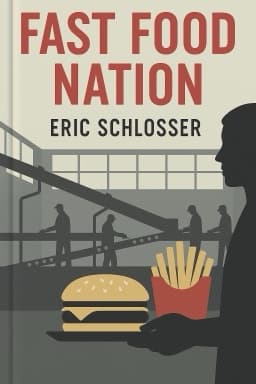
America’s love affair with fast food is more than just a cultural quirk; it’s a powerful economic and social force that has reshaped how we eat, work, and live. Eric Schlosser’s Fast Food Nation peels back the glossy veneer of convenience and cheapness to reveal a complex web of consequences that ripple far beyond the kitchen counter. From the birth of franchising that standardized the American burger to the exploitation of vulnerable workers, this story is both chilling and enlightening.
The rise of franchising in the mid-20th century allowed fast food chains to expand rapidly, creating a uniform dining experience across the nation. This model wasn’t just about business efficiency; it was about embedding fast food into the fabric of American life. Children became prime targets through clever marketing strategies involving toys and playgrounds, ensuring brand loyalty from a young age. Drive-thru windows perfectly complemented the car-centric suburban lifestyle, making fast food synonymous with convenience and modernity.
But behind the scenes, the human cost is staggering. Fast food jobs, often filled by teenagers and immigrants, are characterized by low wages, high turnover, and hazardous conditions. Meatpacking plants, integral to the supply chain, are among the most dangerous workplaces in America, with workers facing sharp tools, repetitive strain injuries, and minimal protections. Many are undocumented immigrants who endure exploitation due to limited legal safeguards.
Food safety is another hidden crisis. The emergence of deadly pathogens like E. coli 0157:H7 coincided with the rise of industrial meat production. Large centralized slaughterhouses process thousands of animals daily, increasing the risk of widespread contamination. Regulatory oversight is fragmented and weakened by industry lobbying, often leaving consumers vulnerable to outbreaks and recalls.
Environmental degradation is equally alarming. Monoculture farming, driven by fast food demand, decimates biodiversity and pollutes waterways with fertilizers and animal waste. Small family farms are disappearing under the pressure of corporate consolidation, eroding rural communities and traditions. Globally, fast food chains adapt menus to local tastes but also symbolize Westernization, provoking both adoption and resistance.
Yet, the story is not without hope. Consumers wield significant power to demand change through boycotts and social media activism, prompting companies to improve labor conditions, food safety, and environmental policies. Sustainable farming practices, local food systems, and ethical sourcing offer promising alternatives. Grass-fed beef and organic products are gaining traction, signaling a shift toward a more just and healthy food future.
This blog has synthesized insights from Fast Food Nation and current research to provide a comprehensive, SEO-optimized look at the fast food industry’s impact on health, labor, environment, and culture. Understanding these dynamics equips us all to make informed choices and advocate for a better food system.
For further reading, explore detailed reviews and analyses from sources like Syrup & Tang, the University of Michigan’s deep dive review, and the National Institutes of Health’s article on food safety and fast food risks. 1 2 3
Want to explore more insights from this book?
Read the full book summary