
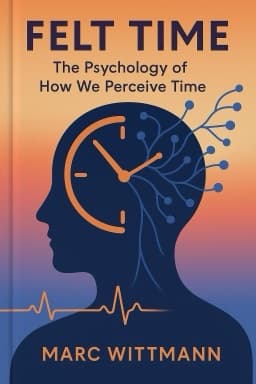
How to Hack Your Brain’s Time Perception and Live More Mindfully
Learn practical strategies backed by neuroscience to slow down your subjective time and enhance your daily experience.

Do you wish you could slow down the relentless rush of time? The good news is that your brain’s perception of time is flexible and can be influenced by intentional practices.
The Brain’s Temporal Architecture
Your conscious experience is shaped by brain oscillations, especially gamma waves that segment perception into discrete moments. This rhythmic processing creates the flow of time you experience. Additionally, your circadian rhythm sets the daily tempo for alertness and mood, influencing how time feels throughout the day.
Emotions and Time Distortion
Emotions warp your sense of time. Fear dilates time, boredom drags it, while positive emotions can either expand or contract perceived duration. Learning to regulate emotions through mindfulness helps stabilize your temporal experience.
Body Rhythms and the Sense of Presence
Your heartbeat and breathing provide a bodily rhythm that the insular cortex integrates to create a unified sense of self and time. Practices that enhance body awareness, like yoga or meditation, strengthen this integration and deepen temporal presence.
Mindfulness and Neuroplasticity
Mindfulness meditation trains your brain to focus attention and regulate emotions, which slows subjective time. Neuroplastic changes occur in brain regions responsible for attention and emotional control, supporting enhanced temporal awareness.
Practical Tips to Hack Your Time Perception
- Introduce novelty into your routine to create richer memories.
- Practice mindfulness daily to enhance presence.
- Engage in body awareness exercises to strengthen temporal grounding.
- Manage emotions to reduce time distortion.
- Balance your temporal focus between past, present, and future.
By hacking your brain’s perception of time, you reclaim control over your experience and live a fuller, richer life.
Sources: FiveBooks, Felt Time, Psychology of Time Perception
Want to explore more insights from this book?
Read the full book summary