
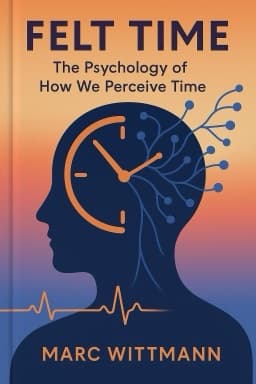
Unlocking the Secrets of Time: How Your Brain and Emotions Trick You Every Day
Explore how your brain’s internal clocks and emotional states shape your experience of time — and how to take back control.

Time is one of the most mysterious aspects of our existence. Though it ticks uniformly on clocks, our perception of time is deeply subjective and malleable.
The Brain’s Internal Clocks
Our brains do not have a single, unified clock but rely on multiple rhythms. Gamma oscillations segment our conscious experience into discrete moments, allowing us to perceive sequences and order. Meanwhile, the circadian rhythm governs daily biological cycles influencing alertness and mood. Disruptions in these rhythms can cause striking time distortions, such as feeling that time speeds up or slows down.
Emotions: The Time Benders
Emotions dramatically alter our experience of time. Fear can make seconds feel like minutes by heightening attention and arousal, an evolutionary advantage for survival. Joy and excitement can either speed up or slow down perceived time depending on context, while boredom stretches time painfully, increasing temporal awareness but with discomfort.
Body Signals and Time
The heartbeat and breath rhythms influence temporal perception by providing a bodily pulse that the brain integrates via the insular cortex. This creates a sense of presence and continuity. Changes in bodily states, like pain or illness, disrupt this integration and distort time perception, showing how deeply embodied our experience of time is.
Why Does Time Fly As We Age?
One of the most common complaints is that time seems to accelerate with age. This phenomenon is linked to memory: novel and emotionally rich experiences produce dense memories that stretch subjective time, while repetitive routines create fewer memory markers, compressing perceived duration. This explains why childhood summers felt endless but adult years seem to vanish.
Mindfulness: Slowing Down Time
Mindfulness practices cultivate presence, slowing subjective time by enhancing attention and emotional regulation. Regular meditation restructures brain networks to support sustained focus and temporal awareness, helping practitioners savor moments and reduce stress.
Taking Control of Your Time
Understanding these mechanisms empowers you to shape your perception of time. Introducing novelty, engaging emotions positively, and practicing mindfulness can make life feel richer and more expansive. Rather than feeling rushed, you can embrace time as a companion guiding your journey.
By unlocking the secrets of time perception, you gain a powerful tool to enhance your well-being and live more fully in the present.
Sources: FiveBooks, Felt Time, Psychology of Time Perception
Want to explore more insights from this book?
Read the full book summary