
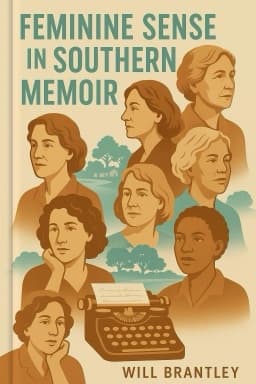
Unveiling the Hidden Voices: How Southern Women Writers Revolutionized Memoir
Discover the untold stories and groundbreaking insights of southern women memoirists who challenged tradition and shaped American literature.

The literary landscape of the American South has long been dominated by male voices, shaping a cultural narrative that often sidelined the experiences and perspectives of women. However, a group of pioneering southern women writers emerged, using memoir and autobiography to challenge these entrenched norms and to craft powerful, nuanced accounts of southern life. Their writings not only enriched the literary canon but also offered profound critiques of race, gender, and identity in a region marked by deep social cleavages.
Among these trailblazers, Lillian Smith stands out for her confessional style, blending Freudian psychological insight with a moral critique of segregation and repression. Her work reveals the psychological cost of racial divisions and the complex interplay between personal experience and cultural taboos. Similarly, Ellen Glasgow and Eudora Welty provide introspective reflections on sheltered southern lives, highlighting the tensions between private selves and public expectations, and how these shaped their artistic identities.
The memoirs of Lillian Hellman and Katherine Anne Porter introduce a politically charged dimension, grappling with ethical responsibilities amid social turmoil and political persecution. Their narratives underscore the role of memory and narrative ethics in confronting historical truths and personal integrity.
Finally, Zora Neale Hurston’s autobiography celebrates individuality and cultural pride, defying both white liberalism and black collectivism. Her vibrant storytelling and candid self-representation challenge stereotypes and assert the primacy of personal agency in the face of societal pressures.
Collectively, these southern women memoirists reveal the multiplicity of southern identities, the intersection of race, gender, and region, and the enduring struggle for voice and recognition. Their legacies continue to inspire feminist scholarship and broader literary discourse, reshaping how we understand the South and its cultural narratives.
By engaging deeply with these memoirs, readers gain insight into the complexities of southern life and the transformative power of storytelling as an act of resistance and self-definition.
Explore these rich narratives and discover how southern women writers have revolutionized memoir, offering timeless lessons on identity, courage, and artistic expression.
Sources: Feminine Sense in Southern Memoir by Will Brantley, University Press of Mississippi, Amazon listings of the book 1 , 2 , 3
Want to explore more insights from this book?
Read the full book summary