
Stop Chasing Time: How 'First Things First' Teaches You to Live by Your Compass
Break free from urgency addiction and discover the inner compass that leads to lasting fulfillment.

In today's fast-paced world, it is easy to become a prisoner of the clock, caught in a relentless chase to meet deadlines, respond to crises, and check off endless to-do lists.
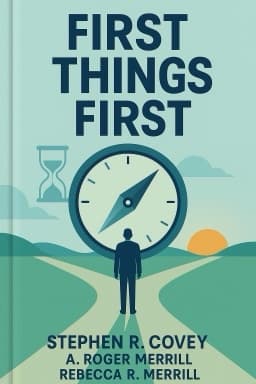
Stephen Covey's 'First Things First' challenges this paradigm by introducing the metaphor of the compass—a symbol of our inner values, purpose, and principles. Unlike the clock, which measures external time, the compass points us toward a meaningful direction. Living by the compass means making choices aligned with our deepest priorities rather than reacting to external pressures.
Urgency addiction manifests in many ways: the frantic multitasker who never feels caught up, the parent overwhelmed by conflicting demands, or the professional who sacrifices health and relationships for short-term gains. These patterns often lead to burnout, stress, and a sense of emptiness despite apparent productivity.
One poignant story involves a new mother who, overwhelmed by urgent tasks, chose to set aside her schedule to simply be present with her child. This conscious choice, guided by the compass of love, brought peace and healing that no schedule could provide.
Breaking free from urgency addiction requires cultivating the space between stimulus and response. Here, our four human endowments come into play: self-awareness to recognize reactive patterns, conscience to guide right action, independent will to choose differently, and creative imagination to envision better ways.
By practicing Quadrant II organizing, we prioritize important but non-urgent activities that nurture our physical health, relationships, learning, and spiritual growth. Scheduling these 'big rocks' first creates a buffer against the tyranny of the urgent.
Living by the compass is not a one-time fix but a lifelong journey of renewal, reflection, and realignment. It invites us to embrace imperfection and growth, finding joy in the process rather than the frantic pursuit of outcomes.
As you reflect on your own life, consider: where is your compass pointing? Are you living intentionally or reacting to the clock? This shift promises not only greater effectiveness but a deeper sense of peace and fulfillment.
Explore more insights from trusted reviews and summaries that illuminate this transformative perspective. 1 2 4
Want to explore more insights from this book?
Read the full book summary