
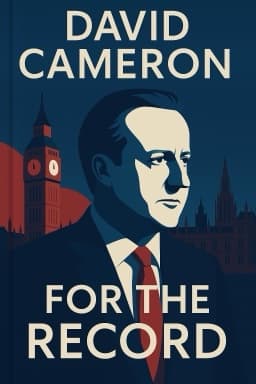
Behind the Scenes of Political Power: The Untold Story of Leadership, Loss, and Legacy
An in-depth exploration of the highs and lows of a political journey that shaped a nation.

Every political journey begins somewhere, often in the quiet corners of family life and early education. Our subject’s upbringing in a privileged English countryside manor was more than just a backdrop; it was a crucible for values like resilience, optimism, and duty. Despite his father's significant physical disability, the household was filled with warmth, humor, and unique family traditions that shaped a future leader's character. This early environment instilled a belief in responsibility and service that would guide him throughout his career.
Transitioning from privilege to politics was neither swift nor easy. Years spent in opposition refined patience and strategic thinking. The party's modernization was crucial to reconnect with a changing electorate, emphasizing inclusivity and social justice. Winning leadership was a testament to embracing change while holding onto core principles. The coalition government that followed was an unprecedented experiment in British politics, demanding compromise and trust between historically opposed parties.
Coalition governance brought its own set of challenges: balancing austerity with social reform, managing public scrutiny, and navigating complex policy compromises. Economic recovery efforts included controversial spending cuts but also landmark social reforms such as the legalization of same-sex marriage, signaling a modern, compassionate conservatism. These measures helped stabilize the economy while broadening political appeal.
On the international stage, decisions about military interventions and security were fraught with difficulty. The rise of new threats like ISIS required innovative responses, including the establishment of the National Security Council to coordinate intelligence and defense. Parliamentary votes on interventions, especially in Syria, revealed the deep divisions and complexities of foreign policy in an interconnected world.
Behind the public role, personal life was marked by profound challenges. Caring for a son with a rare and severe neurological condition tested emotional resilience and underscored the importance of community support. The balance between public duty and private devotion highlighted the human side of leadership often unseen by the public.
The defining moment came with the EU membership referendum — a gamble that unleashed deep divisions and uncertainty. Despite efforts to renegotiate terms and prepare the public, the Leave vote surprised many and led to a period of upheaval. The decision to resign was a difficult but necessary acceptance of political responsibility, emphasizing the weight leaders carry in moments of national crisis.
Reflecting on this journey reveals a legacy centered on the enduring value of centrist politics — a belief in reasoned, inclusive governance amid rising polarization. Post-political efforts in areas like dementia research and global development demonstrate a continued commitment to public service, inspiring future generations to engage thoughtfully with the challenges of our times.
This story is not just about one individual but about the resilience, responsibility, and hope that define effective leadership in a complex world.
References: 1 , 2 , 3 , 4
Want to explore more insights from this book?
Read the full book summary