
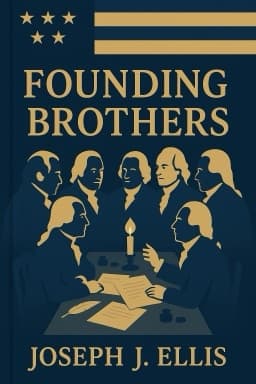
What If the Revolution Failed? The Improbable Story Behind America's Founding
Explore how chance, fear, and contingency shaped the birth of a nation.

Explore how chance, fear, and contingency shaped the birth of a nation
History is often rewritten as destiny, but Joseph J. Ellis’s ‘Founding Brothers’ reminds us that the American Revolution was anything but certain. Imagine a world where the revolutionaries lost—where the British reasserted control, and the dream of a republic died on the vine. Ellis’s account is filled with moments when failure seemed all but assured: the winter at Valley Forge, the near-mutiny of unpaid soldiers, the fractious debates that nearly tore the Continental Congress apart. The founders faced not only external threats, but internal divisions—over slavery, regional interests, and the very nature of government itself.
Even after victory, the experiment teetered on the brink. The Articles of Confederation created a government so weak it could barely collect taxes or enforce laws. States flirted with secession, and economic chaos loomed. Only through a series of desperate compromises—hammered out in secrecy at the Constitutional Convention—did the founders manage to hold the union together. Every step was a gamble, every decision a leap into the unknown.
What if the founders had failed? The United States might have fractured into rival confederacies, or reverted to colonial rule. The ripple effects would have changed the world: no beacon of democracy, no model for revolution, no American century. Ellis’s narrative forces us to confront the fragility of history and the immense courage required to shape it. The founders’ legacy is not just their triumph, but their willingness to risk everything for an uncertain future. 1 3
Want to explore more insights from this book?
Read the full book summary