
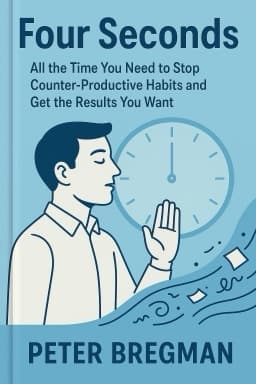
Why Your Goals Are Holding You Back: The Radical Truth About Success from 'Four Seconds'
Discover why rigid goals might be sabotaging your success and how shifting your focus to daily actions can unlock true achievement.

We often believe that setting clear, measurable goals is the cornerstone of success. But what if this widely accepted wisdom is actually limiting us? In Four Seconds, Peter Bregman challenges the conventional goal-setting narrative, exposing its pitfalls and offering a transformative alternative.
One striking example is the common morning rush where children race to meet the goal of brushing their teeth before leaving. They meet the goal but miss crucial steps like flossing or cleaning properly. This illustrates how focusing narrowly on outcomes can lead to incomplete or unsatisfactory results.
Moreover, the famous story that 3% of Harvard MBAs who wrote down their goals earned ten times more than others is an urban myth. Despite its popularity, there is no evidence to support this claim. This myth has led many to overvalue goal-setting without understanding its nuances.
Rigid goals can also encourage unethical behavior. For instance, auto mechanics who must meet hourly productivity targets sometimes overcharge customers or perform unnecessary repairs. Similarly, companies may sacrifice product safety to meet cost goals. These examples highlight how goals can distort priorities.
For example, instead of setting a sales target, focus on building genuine relationships with clients daily. Instead of a weight loss goal, commit to regular exercise and mindful eating. This shift from outcome to process creates sustainable habits and deeper satisfaction.
By redefining success as steady progress in meaningful activities, you free yourself from the pressure of perfect results and open the door to creativity and resilience.
The next blog will delve into the critical difference between motivation and follow-through, revealing why desire alone is not enough to achieve your dreams.
Sources: 1 , 2 , 4
Want to explore more insights from this book?
Read the full book summary