
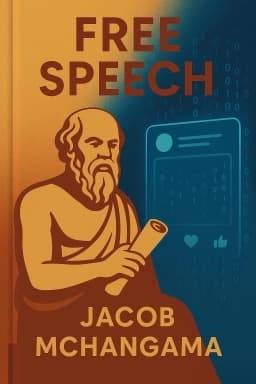
Unlocking the Secrets of Free Speech: From Ancient Athens to Your Smartphone Screen
Discover how the battle for free speech has shaped civilizations and why it matters more than ever today.

Imagine walking the sunlit marble steps of ancient Athens, where citizens gathered in the agora to debate openly. This was the birthplace of free speech, a concept both revolutionary and fragile. The Greeks introduced isēgoría—the right of equal speech—and parrhēsía—bold, frank expression. Yet, even here, the limits were starkly visible in the fate of Socrates, who was sentenced to death for challenging prevailing beliefs. His story is an early reminder: free speech is precious but vulnerable.
Moving forward to the Middle Ages, the struggle continued under the shadow of religious orthodoxy. While universities secretly preserved forbidden knowledge like Aristotle’s works, inquisitions sought to silence heretics and control ideas. Interestingly, the Islamic Golden Age offered a contrasting example of relative tolerance, fostering scientific and philosophical advances. This period taught us that intellectual freedom can persist even under repression, nurtured by courageous individuals.
The printing press revolutionized the spread of ideas, turning pamphlets into the social media of the Renaissance. Suddenly, voices like Martin Luther’s could reach millions, fueling religious reform and social upheaval. The rapid proliferation of printed materials democratized knowledge but also sparked censorship battles, highlighting the double-edged nature of new technologies.
The Enlightenment further expanded free speech through reason and skepticism. Philosophers like Spinoza and Locke laid the groundwork for modern toleration, though not without limits. The Dutch Republic became a haven for free thinkers, showing how political structures can nurture or stifle expression. These ideas culminated in the revolutionary era, where free speech was enshrined as a constitutional right amid political upheaval.
Yet, the 20th century revealed the dark side of censorship under totalitarian regimes. The Soviet Union and Nazi Germany used book burnings, propaganda, and surveillance to suppress dissent and rewrite history. These chilling episodes remind us that controlling information is a tool of oppression, but also that the human spirit can resist even the harshest repression.
After World War II, the Universal Declaration of Human Rights affirmed free speech as a universal right, but the rise of hate speech laws introduced new complexities. Balancing freedom with protections against discrimination remains a delicate and evolving challenge, especially in the digital age.
Today, the internet and social media have transformed communication, connecting billions instantly but also raising thorny issues of algorithmic moderation, misinformation, and elite panic. The digital revolution offers both unprecedented opportunities and risks for free expression.
Ultimately, free speech is a flame that requires constant tending. Legal protections alone cannot sustain it; a culture of tolerance, dialogue, and vigilance is essential. As history shows, freedom can be won, lost, and reclaimed, and it is our shared responsibility to guard this vital right for future generations.
Join us in this exploration to understand the past, navigate the present, and shape the future of free speech.
Want to explore more insights from this book?
Read the full book summary