
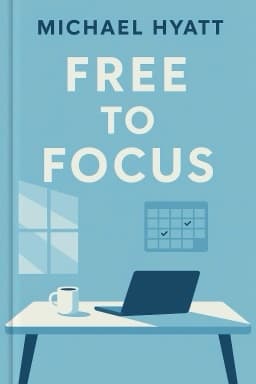
Unlocking True Productivity: The Surprising Secrets Behind 'Free to Focus'
Why Doing Less Can Actually Help You Achieve More

Why Doing Less Can Actually Help You Achieve More
For years, we've been told that productivity means squeezing more tasks into every day. But what if the real secret to success is doing less, not more? In Michael Hyatt's groundbreaking book, Free to Focus, he challenges the cult of busyness and reveals a refreshing new approach to getting things done—one that prioritizes freedom, focus, and fulfillment over mere efficiency.
At the heart of Hyatt's philosophy is a simple truth: Productivity is not about getting more things done; it's about getting the right things done. This means letting go of the endless to-do lists and instead focusing on the activities that truly move the needle in your life and work.
The Productivity Trap: Why Busyness Isn’t the Answer
Many of us fall into the 'Red Queen Effect,' running faster and faster just to stay in the same place. Hyatt shares stories of professionals who worked 60-hour weeks but felt they never made real progress. Research supports this: after 50 hours of work per week, productivity sharply declines, and the risk of burnout skyrockets. The real enemy isn't laziness—it's a lack of clarity and purpose. 2
Vision: Your Productivity Compass
One of the book's most powerful exercises is the creation of a personal vision statement. Hyatt encourages readers to ask, 'What do I want my life to look like?' and then use that vision as a compass for all decisions. This isn't just theory—companies that implemented shorter workdays, like a Swedish Toyota plant, saw both happiness and profits soar. The lesson? When you know what matters, you can achieve more by doing less. 2
The Freedom Compass: Finding Your Desire Zone
Hyatt introduces the Freedom Compass, a practical tool for categorizing your tasks based on passion and proficiency. The goal: spend as much time as possible in your Desire Zone, where you do your best and most enjoyable work. Tasks that fall into the Drudgery, Disinterest, or Distraction zones should be minimized, automated, or delegated.
Mindset Shifts: From Limiting Beliefs to Liberating Truths
Productivity isn't just about tools—it's about mindset. Hyatt identifies common limiting beliefs ('I don't have enough time,' 'I'm not disciplined enough') and replaces them with liberating truths ('I have all the time I need for what matters most'). This shift is crucial: studies show that people who believe they can change their habits are far more likely to succeed.
The Hidden Power of Rest and Play
Perhaps the most counterintuitive advice in Free to Focus is the emphasis on rejuvenation. Studies cited in the book show that working more than 50 hours a week can actually make you less effective. Top performers—from CEOs to athletes—prioritize rest, regular naps, exercise, and meaningful relationships as essential to sustained high performance.
Eliminate, Automate, Delegate
To make space for your best work, you must ruthlessly eliminate nonessentials. Hyatt recommends maintaining a Not-To-Do List, automating repetitive tasks, and delegating whenever possible. These strategies aren't just for executives—anyone can use them to reclaim hours each week.
Acting with Intention: The Ideal Week and the Big 3
Hyatt's system culminates in the design of your Ideal Week. By blocking out time for your highest priorities and focusing on your 'Big 3' outcomes each day, you ensure that your actions align with your vision. Digital boundaries, like turning off notifications, further protect your focus and reduce stress.
Conclusion: A New Path to Fulfillment
Free to Focus is more than a productivity manual—it's a guide to a more intentional, joyful, and free life. By clarifying your vision, focusing on your strengths, shifting your mindset, and protecting your energy, you can escape the busyness trap and create space for what matters most. The journey starts with a single decision: to prioritize what truly matters and let go of the rest. 1 2 3
Want to explore more insights from this book?
Read the full book summary